California can still make big companies report their own greenhouse gas emissions, but it likely can’t force them to report the emissions of their suppliers and customers, or to publish climate-risk reports. That is the bottom line of a Nov. 9, 2026 decision by the U.S. Court of Appeals for the Ninth Circuit in Chamber of Commerce of the United States of America v. Sanchez, the business community’s First Amendment challenge to California’s two first-in-the-nation climate disclosure laws, SB 253 and SB 261. The ruling landed one day before the first SB 253 reports were due, and it leaves several big questions open.
What did the Ninth Circuit decide?
The three-judge panel affirmed in part and reversed in part a Los Angeles federal judge’s refusal to block the laws while the lawsuit goes on. In plain terms:
- SB 253 Scope 1 and Scope 2 reporting can go ahead. These cover emissions from sources a company owns or directly controls (Scope 1) and from the energy it buys (Scope 2).
- SB 253 Scope 3 reporting is likely unconstitutional. Scope 3 covers indirect emissions across a company’s value chain, including suppliers and customers.
- SB 261 is likely unconstitutional in its entirety. That law requires companies to publish climate-related financial risk reports.
Judge Jacqueline H. Nguyen wrote the opinion. Judge Mark J. Bennett concurred in part and dissented in part, and District Judge Kiyo A. Matsumoto of the Eastern District of New York sat on the panel by designation. According to Reuters, Judge Bennett would have blocked both laws completely.
This was a preliminary-injunction ruling. The court decided only whether the challengers are likely to win and whether the laws should be paused in the meantime. It is not a final judgment on whether the laws are constitutional.
What SB 253 and SB 261 require
SB 253: the Climate Corporate Data Accountability Act
SB 253 (Cal. Health & Safety Code § 38532) applies to any entity doing business in California with more than $1 billion in annual revenue. The opinion cites an estimate that about 1,971 companies are covered. The law requires annual emissions reports to the California Air Resources Board (CARB), allows administrative penalties of up to $500,000 per reporting year, and requires covered companies to pay annual fees to fund the program.
Under CARB’s rules, the first reporting deadline was Nov. 10, 2026, covering Scope 1 and Scope 2 emissions for the prior fiscal year. CARB said Scope 3 reporting would follow starting in 2027.
SB 261: the Climate-Related Financial Risk Act
SB 261 (Cal. Health & Safety Code § 38533) applies to companies doing business in California with more than $500 million in annual revenue, which the court said is about 2,675 companies. Every two years, they would have to post a climate-related financial risk report on their own website, following the framework of the Task Force on Climate-related Financial Disclosures (TCFD), and describe the steps they have taken to reduce and adapt to that risk. The Ninth Circuit had already paused SB 261 in November 2025 while the appeal was pending.
Why the court split the laws apart
The case turned on a First Amendment question: when the government forces a business to say something, how closely do courts look at it? The answer depends on whether the forced statement counts as “commercial speech.”
Scope 1 and 2: factual data about a company’s own operations
The majority held that Scope 1 and 2 numbers are commercial speech because they are factual data about a company’s own operations that investors, insurers and others use when deciding whether to do business with it. “In that respect, emissions disclosures function like product warnings in capital markets,” the court wrote. It added that the law does not make companies take a side on climate policy: “The statute requires companies to report emissions data about their operations. That is a factual disclosure, not a moral one.”
Applying intermediate scrutiny, the court found the state had two substantial interests, giving investors information they cannot otherwise get and reducing emissions. It found the state’s third reason, preventing misleading “greenwashing” claims, was not well enough supported by the record.
Scope 3: other people’s emissions
Scope 3 was different. Because those disclosures concern what the court called “diffuse third-party conduct in the value chain,” they are not tied closely enough to a company’s own operations to count as commercial speech. That triggered strict scrutiny, the toughest test, and the court found the requirement likely fails it. As Sidley Austin’s summary explains, the court noted that companies do not hold Scope 3 data the way they hold Scope 1 and 2 data, and that value-chain data can be hard to verify.
SB 261: predictions about a “politically fraught subject”
The court said SB 261 goes “far beyond” factual reporting because compliance “involves predictive and normative judgments about future economic conditions and a politically fraught subject.” That made it noncommercial speech subject to strict scrutiny, which the court said the state “all but concedes it cannot” meet. The court pointed to less restrictive options California could use instead, such as publicizing companies’ existing voluntary disclosures, encouraging voluntary disclosure, or regulating emissions directly.
The opinion summed up the tension in one line: “The First Amendment, however, limits the government’s ability to compel speech.”
What happens next
The severability fight
The biggest open question goes back to the trial court, U.S. District Judge Otis D. Wright II in Los Angeles. He must decide whether the Scope 3 requirement can be cut out of SB 253 while the rest of the law survives. SB 253 contains a severability clause, but DLA Piper notes that the court said that, without severance, the Scope 3 problem would affect every application of the statute. If Scope 3 is found not severable, Scope 1 and 2 reporting could be blocked too.
Possible rehearing or Supreme Court review
Either side can ask the Ninth Circuit to rehear the case, including before a larger “en banc” panel, and could later petition the U.S. Supreme Court. Reuters reported that the U.S. Chamber Litigation Center called the decision an “important victory” and said the Chamber will seek permanent injunctions. Sidley also notes that the court’s reasoning leans on an earlier Ninth Circuit case, PhRMA v. Stolfi, which is itself the subject of a pending Supreme Court petition, and that California’s Legislature returns in January 2027, when lawmakers could revisit the issue.
What it means for companies right now
For now, the practical picture looks like this, based on the ruling and the law-firm analyses cited above:
- Scope 1 and 2 reports: The Nov. 10, 2026 deadline was not paused. CARB said in a December 2024 enforcement notice that, for the first reporting cycle, it would not take enforcement action over incomplete reports from companies making a good-faith effort to comply.
- Scope 3: Plans to start Scope 3 reporting in 2027 are now uncertain and depend on the severability ruling and any further appeals.
- SB 261: The climate-risk reporting law stays blocked, and the ruling makes enforcement in its current form unlikely.
The decision also adds to a broader legal debate over environmental, social and governance (ESG) rules. For background, see our guides to ESG law and regulations and corporate ESG compliance laws, and our look at legal actions against climate change.
FAQ
Is California’s climate disclosure law struck down?
Not entirely, and not finally. The Ninth Circuit let SB 253’s Scope 1 and 2 reporting proceed, but found SB 253’s Scope 3 requirement and all of SB 261 likely unconstitutional at the preliminary-injunction stage. The case continues in the trial court.
Do companies still have to report Scope 1 and Scope 2 emissions?
Yes, for now. The court declined to block those requirements, and CARB’s first deadline was Nov. 10, 2026.
Who brought the lawsuit?
The U.S. Chamber of Commerce, the California Chamber of Commerce, the American Farm Bureau Federation, the Los Angeles County Business Federation, the Central Valley Business Federation and the Western Growers Association sued CARB’s chair and executive officer and California Attorney General Rob Bonta.
What are Scope 1, 2 and 3 emissions?
Scope 1 covers emissions from sources a company owns or directly controls. Scope 2 covers emissions from purchased energy such as electricity. Scope 3 covers other indirect emissions across the value chain, including suppliers and customers.
This article is general information about an ongoing court case, not legal advice. Companies with questions about their own reporting obligations should talk to a qualified attorney.
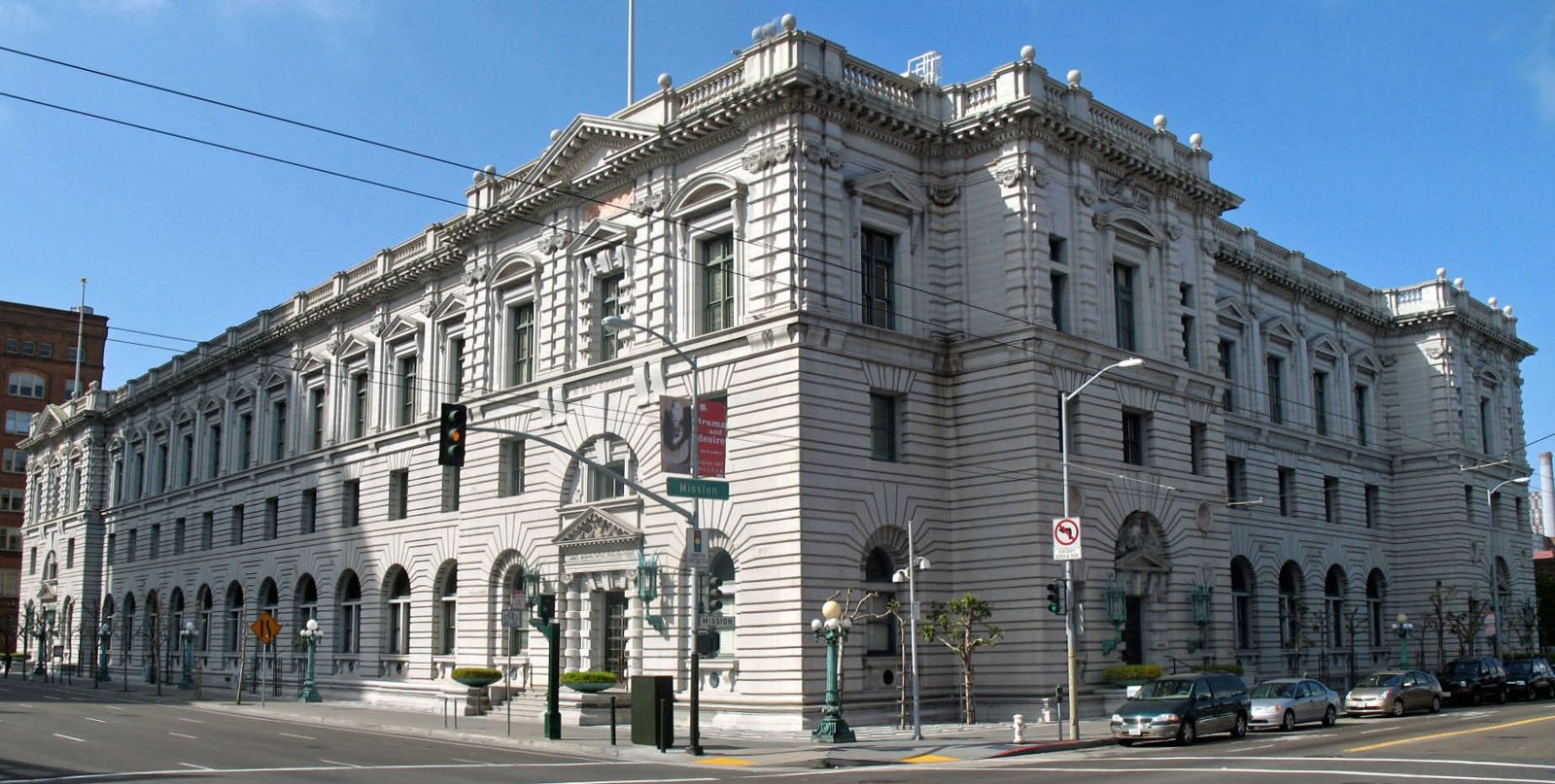
Sources: Ninth Circuit opinion in Chamber of Commerce of the United States of America v. Sanchez, No. 25-5327 (Nov. 9, 2026); Reuters (Nov. 9, 2026); CARB bulletin (Oct. 12, 2026) and enforcement notice (Dec. 5, 2024); Sidley Austin; DLA Piper. Featured image: James R. Browning U.S. Court of Appeals Building, San Francisco, by Sanfranman59 via Wikimedia Commons, CC BY-SA 4.0, cropped.