A federal appeals court has refused to let East Palestine residents take back the personal-injury releases they signed as part of the $600 million Norfolk Southern settlement. On November 10, 2026, a three-judge panel of the U.S. Court of Appeals for the Sixth Circuit ruled that the 196 residents who asked to reopen the deal had not shown fraud by their own class lawyers or by the railroad, so the releases stay binding and the settlement stands.
Below is what the court decided, why it said no, what it means for people still waiting on money, and what could happen next.
This article is general legal information, not legal advice. If you are a class member with questions about your own claim or rights, talk to a lawyer licensed in your state or contact the settlement administrator.
The short answer: the settlement and the releases survive
The opinion, In re East Palestine Train Derailment, No. 26-3499, was written by Judge Amul Thapar and joined by Judges Chad Readler and Whitney Hermandorfer. It affirms an order by U.S. District Judge Benita Y. Pearson in Youngstown, Ohio, who denied the residents’ request for relief in May 2026.
The panel framed the case around one idea: compromise. “Compromise requires give and take,” Thapar wrote. Every resident in the class was entitled to direct payments. Many also chose an extra payment, and in exchange they promised not to sue Norfolk Southern over personal injuries. Some of those residents later regretted the trade. The court held that regret, and new scientific evidence, are not enough to undo a court-approved settlement.
Background: the derailment and the $600 million deal
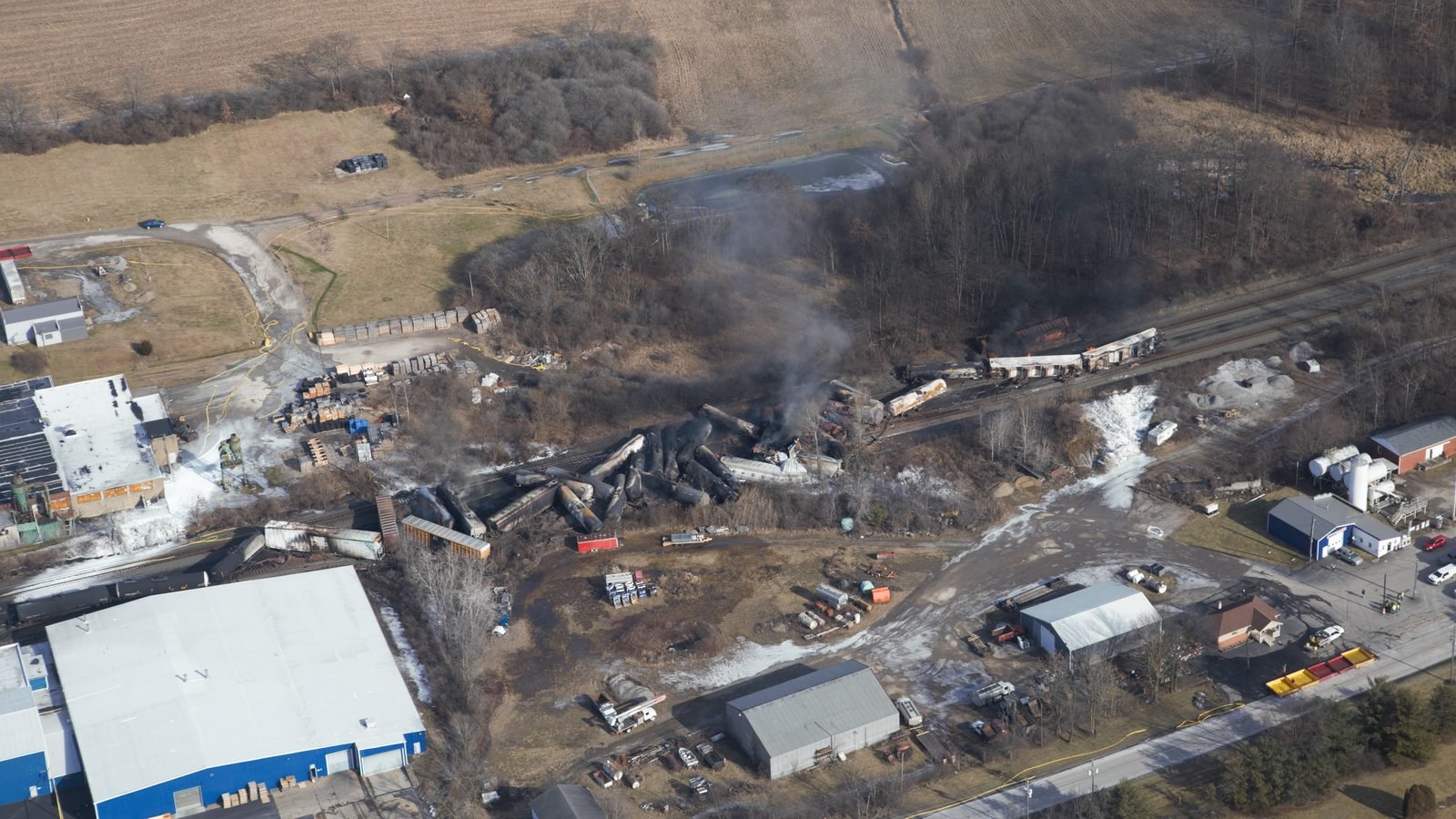
On February 3, 2023, a Norfolk Southern freight train carrying hazardous chemicals derailed and caught fire in East Palestine, Ohio. Three days later, officials carried out a “vent and burn” of vinyl chloride from five railcars, sending a large plume of black smoke over the area, WFMJ reported.
The class action that followed covered people who lived, worked, owned property or ran a business within 20 miles of the derailment site between February 3, 2023, and April 26, 2024, according to the official settlement website. The Sixth Circuit put the class at nearly half a million members.
Under the settlement, which Judge Pearson approved on September 27, 2024, Norfolk Southern created a $600 million fund with three main parts:
- Direct payments that any class member could claim, issued per household.
- Optional personal-injury (“voluntary exposure”) payments for people willing to release all personal-injury claims against the railroad, including claims for illnesses that might show up years later.
- Extraordinary loss or injury claims for people whose circumstances went beyond the standard payments.
The Sixth Circuit already upheld approval of the settlement once, in 2025, over objections that class counsel should have gathered and shared more expert evidence about long-term health risks. The new ruling deals with a separate, later challenge.
What the 196 residents argued
The residents, represented by attorney Jedidiah Bressman, asked the court to set aside the judgment approving the settlement under Federal Rule of Civil Procedure 60, the rule that allows relief from a final judgment in narrow situations. They argued, among other things, that:
- Class counsel showed residents a video of toxicologist Dr. Arch Carson predicting low long-term health risks and called him “completely independent,” without revealing that a public-relations firm, RebuttalPR, supplied the edited video.
- Class counsel downplayed the views of its own retained expert, Stephen Petty, who came to believe the risks were much higher and questioned EPA soil testing.
- Class counsel did not tell the court that one resident had been diagnosed with Reactive Airways Dysfunction Syndrome linked to the derailment.
- Norfolk Southern got the EPA to drop five chemicals from a testing list, timed the deal six days before expert reports were due, and kept the opt-out threshold that would let it walk away from the deal in a confidential side agreement.
Why the Sixth Circuit rejected those claims
A very high bar for reopening a judgment
The panel stressed that Rule 60 motions face “stringent limits” because people rely on final judgments. The residents had to prove their case by clear and convincing evidence, and the appeals court only asked whether Judge Pearson abused her discretion.
No fraud on the court by class counsel
For “fraud on the court,” the residents had to show a lawyer made intentionally or recklessly false statements, or broke a duty to disclose, in a way that deceived the court. The panel found none of that. Class counsel’s statement to the court that it had not retained Carson was true, and the “completely independent” remark was made to class members in a video, not to the judge. The court also learned about Petty’s opinions through a separate declaration, so it could not have been deceived about them. The panel added that class counsel’s duties under Rule 23 run to the class, not the court, and that Ohio’s candor rule for lawyers did not require disclosing background facts like a PR firm’s role.
No fraud by Norfolk Southern
The court said the railroad’s request to trim the EPA testing list simply lined that list up with the agency’s own list of chemicals of concern. Settling before expert deadlines was not misconduct, since most civil cases settle early. And confidential opt-out thresholds are common in class settlements, the panel said, because disclosing them would tell outsiders how many opt-outs they need to blow up a deal.
New science does not reopen a settled case
The residents pointed to post-settlement soil testing, an academic study and internal government emails describing the plume as “really toxic.” The panel said this only confirmed what everyone knew in 2024: the science was contested. “Settling the litigation didn’t settle the science,” Thapar wrote. The question was not who had the best science in hindsight, but whether anyone lied to the court, and the new evidence did not show that. The court also held that Judge Pearson did not have to hold an evidentiary hearing before ruling.
What this means for East Palestine residents
For the roughly 196 residents who brought the motion, the releases remain binding contracts. In practical terms, they cannot bring separate personal-injury lawsuits against Norfolk Southern over the derailment unless a higher court steps in. Judge Pearson noted in her May order that 13 of them had already cashed or received payments ranging from $1,800 to $31,000, WFMJ reported.
For everyone else in the class, the ruling removes another cloud over a settlement that has already paid out much of its money:
- The settlement administrator, Epiq, which replaced Kroll in June 2025, says it mailed final direct-payment awards on June 30, 2026, at a final value of $643.47 per point, issued per household, according to the settlement website.
- Personal-injury payments for valid claims went out by March 31, 2026, the Morning Journal reported. Payments for minors, deceased or incapacitated class members and power-of-attorney claims still have not been mailed while Epiq seeks the needed approvals.
- Many personal-injury payouts were far smaller than residents expected. Spectrum News 1 reported that class lawyers advertised an average of $25,000 per person in 2024, but because the $120 million personal-injury pool was fixed and sign-ups surged, Epiq put the average case at roughly $12,400.
The ruling is a reminder of how releases work in any injury case: once you sign one in exchange for payment, you generally give up the right to sue later, even if you learn more about your injuries. That is the trade-off at the heart of most personal injury claims, and it is why lawyers urge people to understand a release before signing, as explained in our guide on navigating personal injury claims.
What happens next
The residents could ask the full Sixth Circuit to rehear the case or petition the U.S. Supreme Court, but no such filing had been reported as of November 13, 2026. Either step is a long shot: the full court rehears few cases, and the Supreme Court takes only a small share of the petitions it receives. The East Palestine case also sits within a broader debate over how environmental laws are enforced and who pays when industrial accidents harm a community.
Class members with questions about a missing or reissued check can contact the administrator at info@EastPalestineTrainSettlement.com or 1-833-425-3400, as listed on the settlement website.
FAQ
Did the court approve the East Palestine settlement again?
Not exactly. Approval was already final. This ruling rejected a later attempt by 196 residents to undo the personal-injury releases they signed, which leaves the settlement in place.
Can East Palestine residents still sue Norfolk Southern for health problems?
Residents who signed the personal-injury release gave up those claims in exchange for payment, and this ruling keeps those releases binding. Residents who only took direct payments were not asked to sign that release. Anyone unsure about their own situation should get individual legal advice.
Who decided the case?
Sixth Circuit Judges Amul Thapar, Chad Readler and Whitney Hermandorfer, in a published opinion filed November 10, 2026, affirming U.S. District Judge Benita Y. Pearson.
Have all settlement payments been made?
Most have. Direct payments were mailed June 30, 2026, and personal-injury payments for valid claims by March 31, 2026. Payments involving minors, deceased or incapacitated class members, or powers of attorney were still pending, according to the settlement website.
Featured image: Aerial view of the Norfolk Southern derailment in East Palestine, Ohio, Feb. 5, 2023. Photo: National Transportation Safety Board, public domain, via Wikimedia Commons (cropped).