In California, a sexual assault survivor who speaks out publicly about what happened is protected from defamation liability as long as the statements are factual, made without malice, and the speaker had a reasonable basis to file a complaint. On November 9, 2026, a California appeals court gave that protection its first published interpretation, and it read the law broadly. In Sellars v. Rose, the Court of Appeal held that the privilege in Civil Code section 47.1 covers not only a survivor’s account of her own alleged assault but also her statements that the same person abused others.
Here is what the law says, what the court decided, and what the ruling does and does not mean for anyone thinking about speaking out, or about suing someone who did.
This article is general legal information, not legal advice. Defamation law turns on specific facts. If you are considering speaking publicly about an assault, or you have been accused and are considering a lawsuit, talk to a lawyer licensed in your state.
What Civil Code section 47.1 says
California lawmakers passed Assembly Bill 933 in 2023, and Gov. Gavin Newsom signed it on October 10, 2023, according to a press release from the bill’s author, Assemblymember Cecilia Aguiar-Curry. It added section 47.1 to the Civil Code, effective January 1, 2024. The key parts are short:
- The privilege. “A communication made by an individual, without malice, regarding an incident of sexual assault, harassment, or discrimination is privileged under Section 47.”
- Who it covers. It applies only to someone who “has, or at any time had, a reasonable basis to file a complaint” of sexual assault, harassment or discrimination, whether or not a complaint was ever filed.
- What counts as a communication. “Factual information related to an incident” the speaker experienced. The law lists examples including sexual assault, sexual harassment, workplace harassment and discrimination, housing discrimination, school-based harassment and cyber sexual bullying.
- The penalty for a failed lawsuit. A defendant who wins a defamation case over a privileged statement is entitled to reasonable attorney’s fees and costs, plus treble damages for harm caused by the lawsuit, in addition to punitive damages and other relief allowed by law.
The case: a podcast, a ballet studio and a slander suit
The published opinion, filed November 9, 2026 by the Fourth Appellate District, Division Three, in Santa Ana, describes a dispute that grew out of an Orange County dance studio. A former student, Karen Rose, appeared on a four-episode podcast in 2024 and said her former ballet teacher had groomed and sexually abused her as a child in the late 1970s and early 1980s, and that he abused other young dancers too. She had earlier joined a civil lawsuit against the teacher and studio after California reopened the window for certain time-barred childhood sexual abuse claims.
The teacher, his wife and their son sued Rose for slander per se. They denied that any abuse occurred and submitted evidence they said showed the allegations were not plausible. The opinion also notes that the teacher was criminally charged in the mid-1980s over a different student and was acquitted after a three-week trial.
It’s important to be clear about what the court did not do. An anti-SLAPP motion is decided at the start of a case, and the opinion states that the court does not “make factual findings” at that stage. The ruling does not decide whether the alleged abuse happened. It decides whether the slander lawsuit could go forward.
How anti-SLAPP motions work
California’s anti-SLAPP statute, Code of Civil Procedure section 425.16, lets a defendant ask a court to strike a lawsuit early when it targets speech on a public issue. The analysis has two steps. First, the defendant must show the claim arises from protected activity, such as a statement in a public forum about an issue of public interest. Then the plaintiff must show the claim has at least minimal merit. If the plaintiff can’t, the case is dismissed and the defendant can recover attorney’s fees.
What the Court of Appeal decided
1. The podcast statements were protected activity
The plaintiffs conceded a podcast is a public forum. The court then held that accusations of sexual abuse of minors in youth activities are a matter of public interest, joining a line of California and out-of-state cases. The fact that the allegations were decades old didn’t change that, the panel said.
2. Section 47.1 covers statements about other alleged victims
This is the headline holding. The plaintiffs argued the privilege only protects what a speaker says about her own experience. The court disagreed. Because the statute covers information “related to” such an incident, a phrase courts read broadly, and because lawmakers passed it in response to the #MeToo movement, the panel held it can reach statements that the same person abused others. Here, the court said, those statements were related to Rose’s own account because they suggested a pattern that corroborated it.
3. Lasting anger or trauma is not “malice”
The privilege only protects statements made “without malice,” and the statute doesn’t define the word. Drawing on the bill’s legislative history, the court used a case-law definition: a speaker acts with malice if motivated by hatred or ill will toward the plaintiff, or if they lacked reasonable grounds to believe what they said was true. The plaintiffs argued that anyone who believed she had been abused as a child would naturally feel deep resentment, which proves ill will.
The court rejected that argument, saying the malice exception can’t be read to “subsume the very privilege it creates.” Something more is needed: “some wrongful intent separate from the desire to expose the assault and seek justice.” The panel said it could not spell out exactly what that looks like and invited the Legislature to do so.
4. Insults are not slander per se
The claims by the wife and son failed for a different reason. Slander per se under Civil Code section 46 generally requires a false statement charging someone with a crime. The court found that the disparaging remarks about the wife and son, while insulting, did not accuse either of them of a crime. For a refresher on those categories, see our guide to slander versus libel.
The court affirmed the order striking the complaint and awarded Rose her costs and attorney’s fees on appeal, with the amount to be set by the trial court.
Why this ruling matters
The court said it published the opinion because no other California appellate court had yet discussed section 47.1. That makes it the first appellate guidance on a statute that has drawn attention in high-profile litigation. The opinion itself cites a June 2026 federal decision in Wayfarer Studios LLC v. Lively, applying California law, which observed that the statute “provides no instructions” on how courts should decide whether a communication was made without malice. State trial courts now have a published appellate reading to follow.
A few practical takeaways, based on the statute and the opinion:
- It is a qualified privilege, not a blanket shield. It protects factual statements made without malice by someone with a reasonable basis to file a complaint. Knowingly false accusations are not protected.
- Suing over protected statements is risky. A plaintiff who loses can owe the speaker’s attorney’s fees under both the anti-SLAPP statute and section 47.1, and section 47.1 adds treble damages.
- Accused people still have options. The privilege does not cover statements made with malice or without reasonable grounds, and it doesn’t stop someone from presenting evidence that an accusation is false. The opinion also notes that the plaintiffs had offered evidence of falsity; they lost because they couldn’t show the statements were unprivileged.
The Metropolitan News-Enterprise and the California Courts Newsroom both described the decision as a case of first impression. For broader context on where speech crosses the line, see what you can and cannot say online under defamation law, and for employers, our harassment policy checklist.
What happens next
The case returns to the Orange County Superior Court to set the amount of attorney’s fees owed for the appeal. The plaintiffs could ask the California Supreme Court to review the decision. The underlying civil abuse lawsuits are separate cases, and this ruling does not resolve them.
FAQ
Can I be sued for saying someone sexually assaulted me in California?
Anyone can file a lawsuit, but under Civil Code section 47.1 a factual statement about an assault you experienced is privileged if it was made without malice and you had a reasonable basis to file a complaint. If a defamation suit over a privileged statement fails, the speaker can recover attorney’s fees, costs and treble damages.
Does section 47.1 protect statements about other victims?
According to Sellars v. Rose, it can, when those statements are related to the speaker’s own experience, such as describing a pattern of similar abuse by the same person.
Did the court decide whether the abuse happened?
No. The ruling only decided that the slander lawsuit could not proceed. The court made no factual findings about the underlying allegations, which the plaintiffs deny.
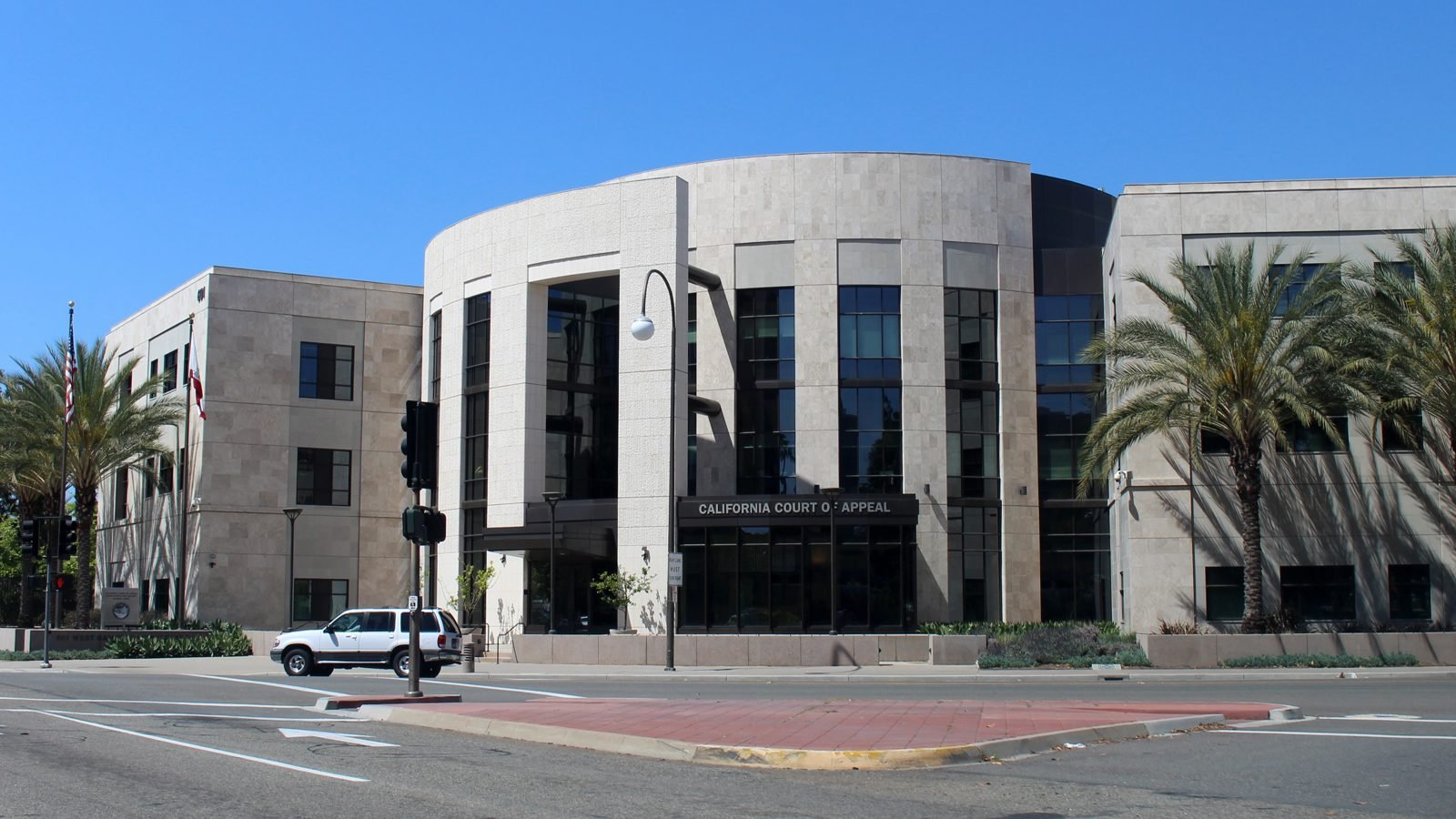
Featured image: California Court of Appeal, Fourth District, Division Three courthouse in Santa Ana, California. Photo: Coolcaesar, CC BY-SA 4.0, via Wikimedia Commons (cropped).