The U.S. Supreme Court will decide whether President Donald Trump can shut off access to asylum at the U.S.-Mexico border. On November 13, 2026, the justices agreed to hear Mullin v. Refugee and Immigrant Center for Education and Legal Services (No. 26-239), the government’s appeal of a D.C. Circuit ruling that found the policy unlawful. The asylum restrictions remain in place for now, arguments are expected next spring, and a decision is likely by the end of June 2027.
Here is what the policy does, what the lower courts decided, the two questions the justices agreed to answer, and what the case means for people arriving at the border in the meantime.
This article is general legal information, not legal advice. Immigration cases depend heavily on individual facts and change quickly. Anyone facing removal or considering an asylum claim should speak with a licensed immigration attorney or an accredited representative.
What the Supreme Court agreed to decide
According to the official Supreme Court docket, the government filed its petition on August 24, 2026, and the Court granted it on November 13 “limited to Questions 1 and 2.” The questions presented are:
- Whether Presidential Proclamation No. 10888 and its implementing guidance, “which suspended the entry of certain aliens and precluded their access to statutory provisions that would enable their continued presence in the country, including asylum,” are lawful.
- Whether 8 U.S.C. 1252(f)(1) bars the classwide relief the district court entered.
The government also asked the justices to rule that the certified class of challengers violated Article III and the class-action rules. The Court declined to take up that third question, as SCOTUSblog reported.
What the asylum proclamation does
On January 20, 2025, Trump signed a proclamation titled “Guaranteeing the States Protection Against Invasion,” published as Proclamation 10888 at 90 Fed. Reg. 8333. It declared that “an invasion is ongoing at the southern border” and suspended the entry of noncitizens “engaged in the invasion.” It relied on Section 212(f) of the Immigration and Nationality Act and on Article IV, Section 4 of the Constitution, which guarantees protection to the states against invasion.
The Department of Homeland Security then issued guidance that, according to SCOTUSblog’s summary, barred covered noncitizens from applying for asylum and said people who entered despite the suspension would be quickly removed without some of the procedural protections the law normally provides. Reuters reported that the bar applies to people caught crossing illegally and also to people who arrive at official crossings without certain medical or criminal history information, and that the proclamation stays in effect until the president decides the “invasion” has ended.
The two laws in tension
The president’s power to suspend entry
8 U.S.C. 1182(f) (INA Section 212(f)) lets the president, when he finds that the entry of any class of noncitizens “would be detrimental to the interests of the United States,” suspend their entry by proclamation “for such period as he shall deem necessary.” The Supreme Court upheld a broad use of this power in the 2018 travel ban case, Trump v. Hawaii.
The right to apply for asylum
8 U.S.C. 1158(a)(1) says that any noncitizen “who is physically present in the United States or who arrives in the United States (whether or not at a designated port of arrival …), irrespective of such alien’s status, may apply for asylum.” Separate laws and treaty obligations bar sending people to a country where they are likely to be persecuted or tortured. Those protections are known as withholding of removal and protection under the Convention Against Torture (CAT).
The government says the suspension power lets the president deny asylum applications in advance. The challengers say Section 212(f) controls who may enter, not what happens to people already here, and cannot override what Congress wrote in the asylum statute. If you want background on how asylum claims normally work, our guide to preparing for an asylum interview walks through the credible-testimony stage.
How the lower courts ruled
The case was filed in federal court in Washington, D.C., by 13 individuals who say they were persecuted or tortured in their home countries, along with three immigration nonprofits. U.S. District Judge Randolph Moss certified a class of immigrants who are or would be subject to the proclamation, held the DHS guidance unlawful and barred officials from carrying it out against class members. Reuters dates that ruling to July 2025.
On April 24, 2026, a divided D.C. Circuit panel largely upheld it. According to SCOTUSblog, Judge J. Michelle Childs, joined by Judge Cornelia Pillard, wrote that the “text, structure, and history” of immigration law show Congress “did not intend to grant the Executive the expansive removal authority it asserts,” and that the proclamation and guidance are unlawful “to the extent that they circumvent … removal procedures and cast aside federal laws affording individuals the right to apply and be considered for asylum or withholding of removal protections.”
Judge Justin Walker dissented in part. He would have held that the president can deny all asylum applications and skip the application process, but he agreed that the government “cannot remove aliens to countries where they will be persecuted,” and cannot strip the procedures that protect against that.
The class-wide relief question
The second question could matter beyond asylum. 8 U.S.C. 1252(f)(1) says that no court other than the Supreme Court has authority “to enjoin or restrain the operation of” certain removal provisions “other than with respect to the application of such provisions to an individual alien against whom proceedings under such part have been initiated.” In 2022, in Garland v. Aleman Gonzalez, the Supreme Court read that language to bar lower courts from issuing classwide injunctions over those provisions.
Solicitor General D. John Sauer argues the same bar applies here. The challengers respond that the proclamation rests on other laws that the provision does not cover. A win for the government on this question could limit how lower courts handle immigration class actions even if the policy itself is later found unlawful.
What the rules are right now
The D.C. Circuit kept its ruling on hold while the government appealed, so the asylum restrictions remain in effect. According to the Center for Gender and Refugee Studies, which represents the challengers, people seeking protection at the border currently do not have access to asylum, but their claims for withholding of removal and CAT protection must still be considered. Agreeing to hear the case does not change those rules or signal how the Court will rule.
How this fits the Court’s immigration docket
The case joins a crowded immigration docket. SCOTUSblog notes the Court is already set to review the administration’s practice of deporting people to countries not named in their removal orders and its policy of detaining people arrested inside the U.S. without a hearing. Reuters reports that arguments over third-country removals are scheduled for December 9, and that in June the Court sided with the government on turning away asylum seekers when officials deem border crossings too overburdened. The Court also recently let border wall construction resume, as we covered in our explainer on the Big Bend border wall ruling. For the bigger picture, see how immigration laws and policies are changing.
What happens next
The government will file its merits brief first, followed by the challengers and amicus briefs. SCOTUSblog expects oral argument sometime next spring, and Reuters says a ruling is expected by the end of June. Until then, the current restrictions stay in place.
FAQ
Did the Supreme Court approve Trump’s asylum ban?
No. On November 13, 2026, the Court only agreed to hear the case. It has not ruled on whether the proclamation is lawful.
Can people at the southern border apply for asylum right now?
Under the current stay, covered people at the border do not have access to asylum, but their claims for withholding of removal and Convention Against Torture protection must still be considered, according to the challengers’ lawyers.
What is Section 212(f)?
It is the part of the Immigration and Nationality Act, codified at 8 U.S.C. 1182(f), that lets the president suspend the entry of a class of noncitizens by proclamation when he finds their entry would be detrimental to U.S. interests.
When will the Supreme Court decide the asylum case?
Arguments are expected in spring 2027, with a decision likely by the end of June 2027.
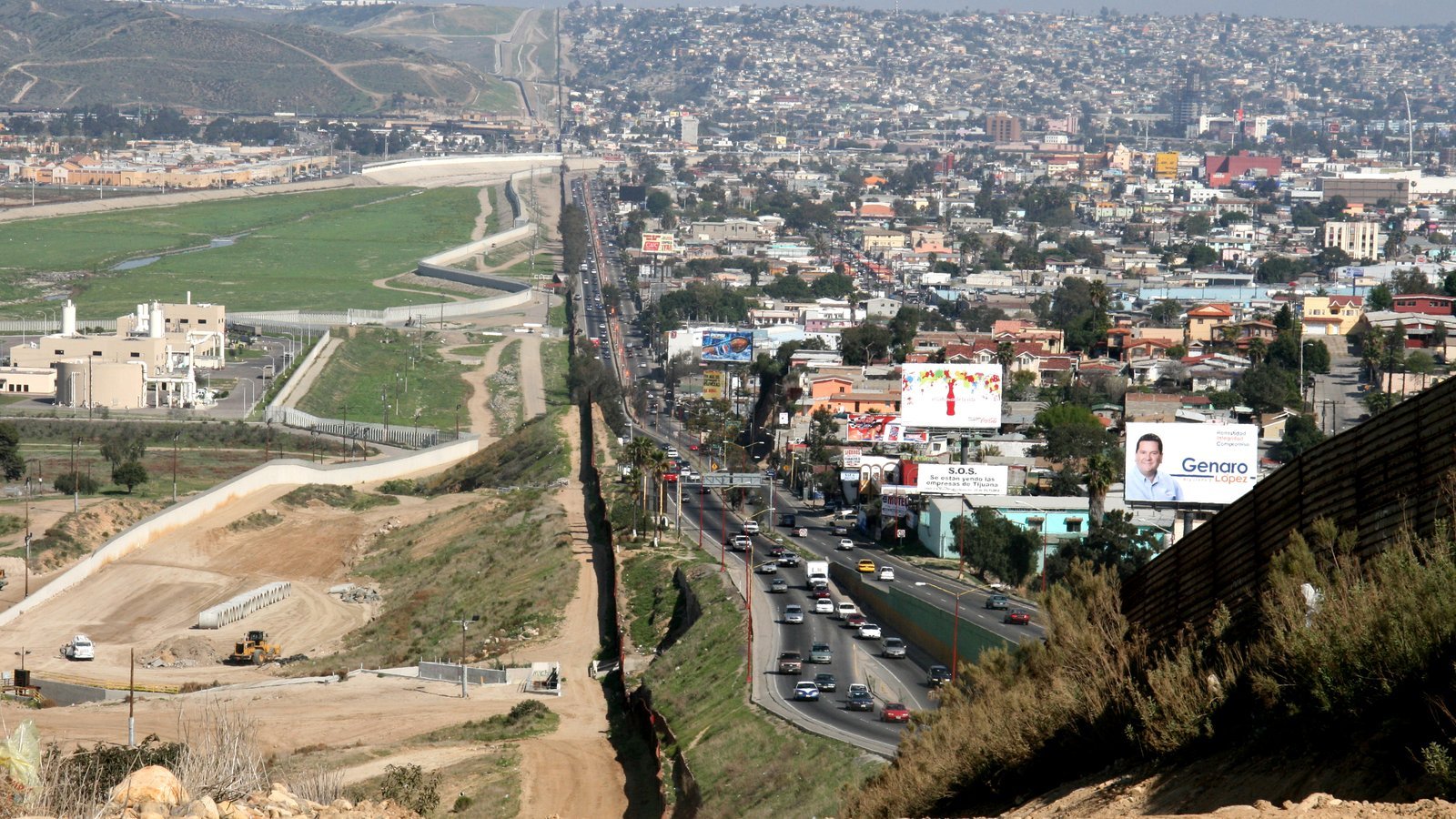
Featured image: The U.S.-Mexico border fence separating Tijuana, Mexico (right) from the United States. Photo: Sgt. 1st Class Gordon Hyde, National Guard Bureau, public domain, via Wikimedia Commons (cropped).