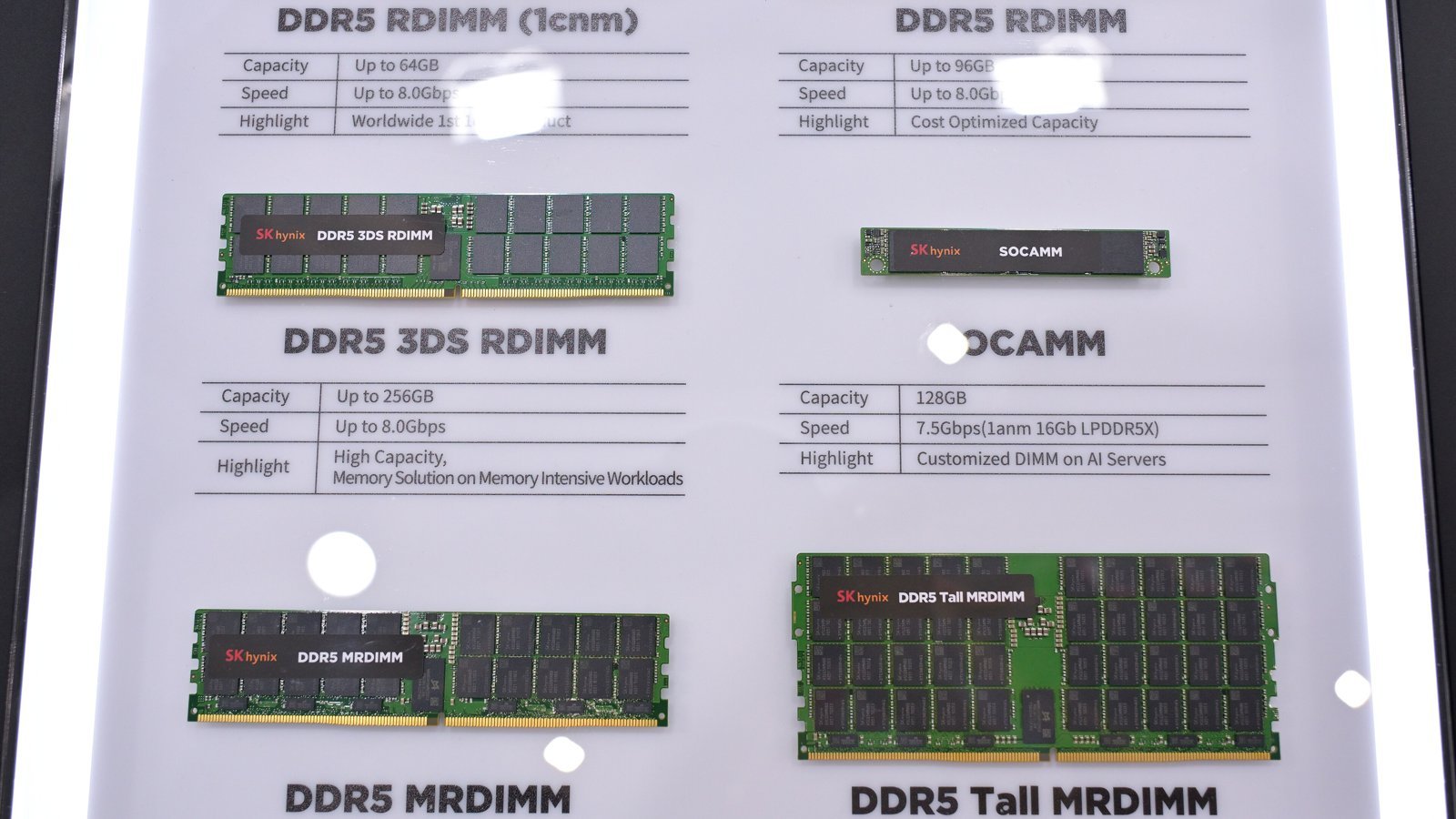
A federal judge in San Jose has refused to throw out a proposed class action accusing Samsung, SK Hynix and Micron of conspiring to restrict the supply of ordinary computer memory. In an order signed on November 14, 2026, U.S. District Judge Noël Wise ruled that the plaintiffs had plausibly alleged an illegal agreement under Section 1 of the Sherman Act, so the case moves on to the next stage. It is not a finding that the companies broke the law. It means the lawsuit survived the first major hurdle, and the three chipmakers now have to answer the complaint by December 7, 2026.
Below is what the case is about, why the judge let it go forward when a similar DRAM lawsuit was thrown out in 2022, and what it means if you have been paying record prices for RAM.
This article is general legal information about a pending lawsuit, not legal advice. The allegations described here have not been proven.
The case at a glance
- Case: Garciaguirre et al. v. Samsung Electronics Co., Ltd. et al., No. 5:26-cv-06345-NW (N.D. Cal.)
- Judge: U.S. District Judge Noël Wise
- Filed: June 25, 2026, by 17 consumers and small businesses from five states
- Claims: Section 1 of the Sherman Act, plus antitrust and consumer protection laws of California, Florida, Minnesota, New York and Wisconsin
- Ruling: Motion to dismiss denied on November 14, 2026 (read the order)
- Next dates: Answers due December 7, 2026; initial case management conference January 12, 2027 at 9:00 a.m.
What the lawsuit claims
DRAM is the “working memory” in nearly every computer, phone and server. According to the order, Samsung, SK Hynix and Micron together controlled more than 91% of global DRAM revenue as of the third quarter of 2025, and the companies themselves agreed in their motion that the industry is an oligopoly.
The plaintiffs say the three companies coordinated four moves that choked off supply of conventional memory, the DDR4, DDR5 and similar chips used in ordinary PCs, phones and servers:
- Production cuts announced between October 26, 2022 (SK Hynix), November 16, 2022 (Micron) and April 7, 2023 (Samsung), during the industry downturn the companies called the “DRAM winter.”
- A pivot to high-bandwidth memory (HBM) for AI accelerators beginning in 2023, which the complaint says uses about three to four times the wafer area per gigabyte of DDR5.
- An exit from DDR4, with all three announcing between April and June 2025 that they would wind down mainstream DDR4 production while it was still widely used.
- A refusal to expand conventional DRAM capacity even after prices soared, including delayed factory construction.
The complaint, as summarized in the order, alleges contract DRAM prices rose about 50% in Q4 2025, 93% in Q1 2026 and 58% in Q2 2026, that retail prices rose 500% after early October 2025, and that conventional DRAM prices rose 697% over 18 months. Those figures are the plaintiffs’ allegations, not findings by the court.
Why the judge let the case go forward
The legal test: parallel conduct plus “plus factors”
Section 1 of the Sherman Act bans any “contract, combination … or conspiracy, in restraint of trade.” The catch is that competitors in a concentrated market often act alike without agreeing to anything. Courts call that lawful “conscious parallelism.” Under the Supreme Court’s 2007 decision in Bell Atlantic Corp. v. Twombly, a plaintiff without direct evidence of a deal must plead parallel conduct and “plus factors” that make an agreement plausible, not just possible.
Judge Wise found the plaintiffs pleaded parallel conduct in at least three ways: the initial supply cuts, the parallel pivots to HBM and the parallel exits from DDR4. She rejected the DDR3 allegations, noting that Micron kept making DDR3, so that looked like an ordinary phase-out of old technology.
The plus factors that counted
The court weighed eight alleged plus factors and found several supported an inference of conspiracy:
- Moves that are hard to undo. The order points to long-term HBM supply deals, reports that Samsung and SK Hynix refused long-term contracts with major conventional DRAM buyers, and Micron’s December 3, 2025 decision to close its 30-year-old consumer brand, Crucial. The judge said these went beyond cuts that “can be easily readjusted.”
- Delayed factories. Comparing it to refinery capacity in an earlier Ninth Circuit oil case, the court said decisions not to build manufacturing capacity are hard to reverse if rivals don’t follow.
- The DDR4 exit. Taking the complaint as true, all three exited in the same quarter while demand stayed strong, to the point that older DDR4 cost more per gigabyte than DDR5.
- Identical customer vetting. In January 2026 all three allegedly began asking buyers the same questions about end users, quantities and whether demand was real. The judge found this “strongly” supported a plausible inference of conspiracy.
- History. The order notes the companies’ past DRAM cartel from 1998 to 2002, which led to guilty pleas and fines of $300 million for Samsung and $185 million for Hynix, while Micron got immunity for cooperating.
Not everything worked for the plaintiffs. The court gave no weight to the companies’ public statements to investors or to their attendance at industry conferences, and treated the market structure as neutral.
“Hawks flying in formation”
At the hearing, the defendants quoted a line from Judge Posner that competitors in concentrated markets “watch each other like hawks.” Judge Wise answered that the allegations “go beyond hawks watching each other; their contentions are more akin to hawks flying in formation – an activity that hawks ordinarily do not do.” The line was picked up widely, including by Tom’s Hardware.
Why this case is different from the 2018 DRAM lawsuit
The chipmakers argued this was a rerun of In re DRAM Indirect Purchaser Antitrust Litigation, a suit over a 165% price spike from 2016 to 2018 that was dismissed and then affirmed by the Ninth Circuit in 2022. Judge Wise disagreed. She said the earlier case described a “follow the leader” pattern by a dominant Samsung, while this one alleges riskier cuts started by SK Hynix and Micron, decisions that could not easily be reversed, a refusal to cash in on a nearly 700% price jump, and new customer vetting, all by companies with a cartel history. The companies argue their choices were independent responses to AI demand, as TechPowerUp and others noted.
Algorithm and supply-coordination cases are a growing part of antitrust law; for background, see our explainer on AI pricing algorithm lawsuits.
What happens next
- December 7, 2026: Samsung, SK Hynix and Micron must file answers to the complaint.
- January 12, 2027: Initial case management conference, which will shape the schedule and scope of discovery.
- Later: Discovery, then a motion for class certification under Federal Rule of Civil Procedure 23. To win at trial, the plaintiffs would need to prove an actual agreement, a much higher bar than surviving a motion to dismiss.
Class actions often end in settlement rather than trial, as the East Palestine settlement ruling shows, but nothing like that has been announced here.
What it means if you bought RAM or a PC
Right now, there is nothing to file. No class has been certified, no settlement exists and there is no claim form. Be wary of any website or email asking you to pay or hand over personal details to “join” the DRAM lawsuit. If a class is ever certified or a settlement is reached, the court would normally approve an official notice explaining who qualifies.
Keep receipts or order histories for memory, PCs, laptops or graphics cards bought in recent years. If you want to understand your wider rights as a buyer, our guide to consumer protection laws covers the basics. Under federal antitrust law, people injured by a violation can seek three times their damages (15 U.S.C. § 15), though who can recover, and under which state laws, is something the court will sort out later.
FAQ
Did the judge find that Samsung, SK Hynix and Micron fixed prices?
No. At this stage the court must accept the complaint’s factual allegations as true. The ruling only says the plaintiffs pleaded enough to make a conspiracy plausible.
Who filed the DRAM lawsuit?
Seventeen consumers and small businesses from California, Florida, Minnesota, New York and Wisconsin, filed June 25, 2026 in the Northern District of California.
Can I join the DRAM class action?
Not yet. It is a proposed class action. Membership would be defined only if the court certifies a class, and official notice would follow.
Will this lower RAM prices?
The ruling does not order any change in production or pricing. It only allows the lawsuit to continue.
When is the next hearing?
The initial case management conference is set for January 12, 2027 at 9:00 a.m., after the companies’ answers are due on December 7, 2026.
Sources: Order Denying Motion to Dismiss, Garciaguirre v. Samsung Electronics, No. 26-cv-06345-NW (N.D. Cal. Nov. 14, 2026); GovInfo case record; Tom’s Hardware; TechPowerUp; 15 U.S.C. §§ 1 and 15; Fed. R. Civ. P. 23. Featured image: SK Hynix DDR5 memory modules at Computex 2025, by 4300streetcar, Wikimedia Commons, CC BY 4.0, cropped.