Can international students still stay in the United States for as long as their degree takes? For now, yes. On November 16, 2026, a federal judge in Boston struck down the Department of Homeland Security’s “duration of status” rule, which would have capped most F-1 student and J-1 exchange visitor stays at four years and forced anyone needing more time to apply for an extension. A day later, a second Boston judge blocked new DHS limits on curricular practical training (CPT), the program that lets F-1 students take internships and other training tied to their studies.
Here is what each ruling decided, what stays the same for students and schools, and what could still change if the government appeals.
Ruling 1: The four-year cap on student visa stays is vacated
The first case is Presidents’ Alliance on Higher Education and Immigration v. U.S. Department of Homeland Security, No. 1:26-cv-13799 (D. Mass.). U.S. District Judge F. Dennis Saylor IV granted summary judgment to the plaintiffs and vacated the final rule, titled “Establishing a Fixed Time Period of Admission and an Extension of Stay Procedure for Nonimmigrant Academic Students, Exchange Visitors, and Representatives of Foreign Information Media,” 91 Fed. Reg. 44976 (July 17, 2026).
What the rule would have changed
For decades, F-1 students and J-1 exchange visitors have been admitted for “duration of status,” often shown as “D/S” on their records. Instead of a fixed end date, they can stay as long as they keep making progress in their program. According to the Presidents’ Alliance case summary, the July 2026 rule would have replaced that system with fixed admission periods of no more than four years. Students and scholars who needed more time would have had to apply for an extension of stay. The rule also limited students’ ability to change educational objectives, transfer schools or pursue additional programs, and it set fixed admission periods for foreign media representatives in I status.
The rule was set to take effect on September 15, 2026. It never did. Judge Saylor postponed it in a September 14 preliminary order, and the government appealed that order to the First Circuit.
Why the judge struck it down
The court held that the rule was arbitrary and capricious under the Administrative Procedure Act, the federal law that sets ground rules for how agencies make regulations. Adopting his earlier analysis, Judge Saylor found that DHS failed to properly weigh costs and benefits, that its stated reasons of fraud and national security did not support the rule, that it did not consider less burdensome alternatives, and that it did not adequately respond to significant public comments.
He also found the rule exceeded DHS’s authority. The opinion gives the example of a student who wants to pursue an M.B.A. after a J.D. and says the rule “would effectively prohibit such a student from entering the United States to pursue those studies.” In the court’s words: “Put bluntly, DHS is seeking to prevent or discourage the very activity—providing educational opportunities for foreign students in the United States—that Congress sought to permit and encourage.”
On the remedy, DHS asked the court to send the rule back to the agency without striking it. The judge refused, writing that “the current regime has existed for decades, and the Final Rule has not gone into effect,” so vacating it would not be disruptive.
Ruling 2: New limits on CPT internships are blocked
The second case is Association of American Universities v. U.S. Department of Homeland Security, No. 1:26-cv-14520 (D. Mass.). On November 17, U.S. District Judge Julia E. Kobick granted a stay and a preliminary injunction against two Student and Exchange Visitor Program (SEVP) broadcast messages issued on August 12 and August 24, 2026.
What CPT is and what changed in August
Under federal regulations, CPT covers any “alternative work/study, internship, cooperative education or any other type of required internship or practicum” that is “an integral part of an established curriculum” (8 C.F.R. § 214.2(f)(10)(i)). As Judge Kobick’s order explains, the government has read that language since 1991 to include training for which students earn academic credit, whether the training was required or elective.
The August broadcasts said that to count as CPT, training must be “required for all students pursuing that degree,” and that CPT cannot be part of an elective course. The judge gave a concrete example: a law school could no longer authorize CPT for an F-1 law student to extern for a federal judge for credit unless every J.D. student had to do such an externship. Schools responded by denying or rescinding CPT authorizations and changing curricula.
The scale is significant. Reuters reported, citing Immigration and Customs Enforcement data, that 140,775 student visa holders were authorized for CPT in 2024, and that Amazon and Tesla were the top two employers of CPT students that year.
Why the judge blocked the broadcasts
Judge Kobick found the plaintiffs were likely to succeed on their claim that the broadcasts were arbitrary and capricious because SEVP “departed from its longstanding position of treating elective for-credit training as CPT without acknowledging, let alone explaining, the change or considering serious reliance interests.” As Reuters quoted her: “Correct or not, this new interpretation is inconsistent with the government’s previous position.”
What the order does, and does not, do
- A stay of the broadcasts. Under 5 U.S.C. § 705, the August 12 and August 24 broadcasts “may not be enforced or applied pending judicial review.”
- An injunction for the plaintiffs and their members. DHS, ICE and the Justice Department may not enforce the broadcasts’ interpretation against the plaintiff groups and their members, including members’ employees and students, both going forward and for approvals made before the broadcasts.
- Not included. The judge declined to order DHS to rescind past adverse actions or to send written notice to every SEVP-certified school, finding the plaintiffs had not justified those requests.
This is a preliminary ruling. The case continues, and the final outcome could differ.
What this means for international students right now
Based on the two orders and the plaintiffs’ published summaries:
- D/S remains in place. The Presidents’ Alliance says the longstanding duration of status framework “remains in place nationwide.” Students do not need to file extension-of-stay applications under the vacated rule.
- Transfers and new programs are not limited by the rule. The rule’s restrictions on changing educational objectives, transferring and pursuing additional programs were vacated along with the four-year cap.
- Elective for-credit CPT is back on the table. While the stay is in effect, schools may again treat elective for-credit training as CPT under the earlier interpretation. Authorization still has to come from your school’s designated school official before work starts.
- Talk to your international student office. Schools are the ones who record status and CPT in the Student and Exchange Visitor Information System, so they will know how each ruling is being applied at your institution.
The rulings arrive as enrollment falls. Higher Ed Dive reports that the number of foreign students at U.S. colleges dropped 2.7% in 2025-26 according to the Open Doors report, with preliminary fall 2026 data showing another 9% decline at surveyed institutions.
What happens next
The government’s existing First Circuit appeal targets the September preliminary order, not the November 16 final judgment, and the appeals court put that appeal on hold on November 13. According to the Presidents’ Alliance, DHS can separately appeal the final judgment and seek a stay, but “filing an appeal or requesting a stay does not itself suspend the ruling.” Higher Ed Dive reported that DHS did not immediately respond to questions about next steps. In the CPT case, litigation over the broadcasts continues in district court, and an appeal of the preliminary injunction is possible.
Both cases are part of a broader pattern of courts testing how far agencies can go in reshaping immigration programs without Congress. For background on that shifting landscape, see our overview of how immigration laws and policies are changing and our look at proposals to reform immigration policy. The limits on agency power are also at the center of a pending Supreme Court case, explained in our guide to Department of Labor v. Sun Valley Orchards.
FAQ
Is the four-year limit on F-1 student visas in effect?
No. The rule never took effect, and on November 16, 2026, a federal judge vacated it in its entirety. Duration of status remains the framework for F-1 and J-1 admissions unless a higher court changes that.
Can I do an elective internship for credit on CPT again?
The August broadcasts that barred elective for-credit CPT are stayed and cannot be enforced while the case proceeds. Your designated school official must still authorize CPT, and school policies vary, so check with your school before starting.
Could DHS still win on appeal?
Yes. The government can appeal both rulings to the First Circuit. Students should watch for updates from their schools.
This article is general information about court rulings, not legal advice. Immigration rules change often and depend on individual facts; talk to your school’s international student office or a licensed immigration attorney about your situation.
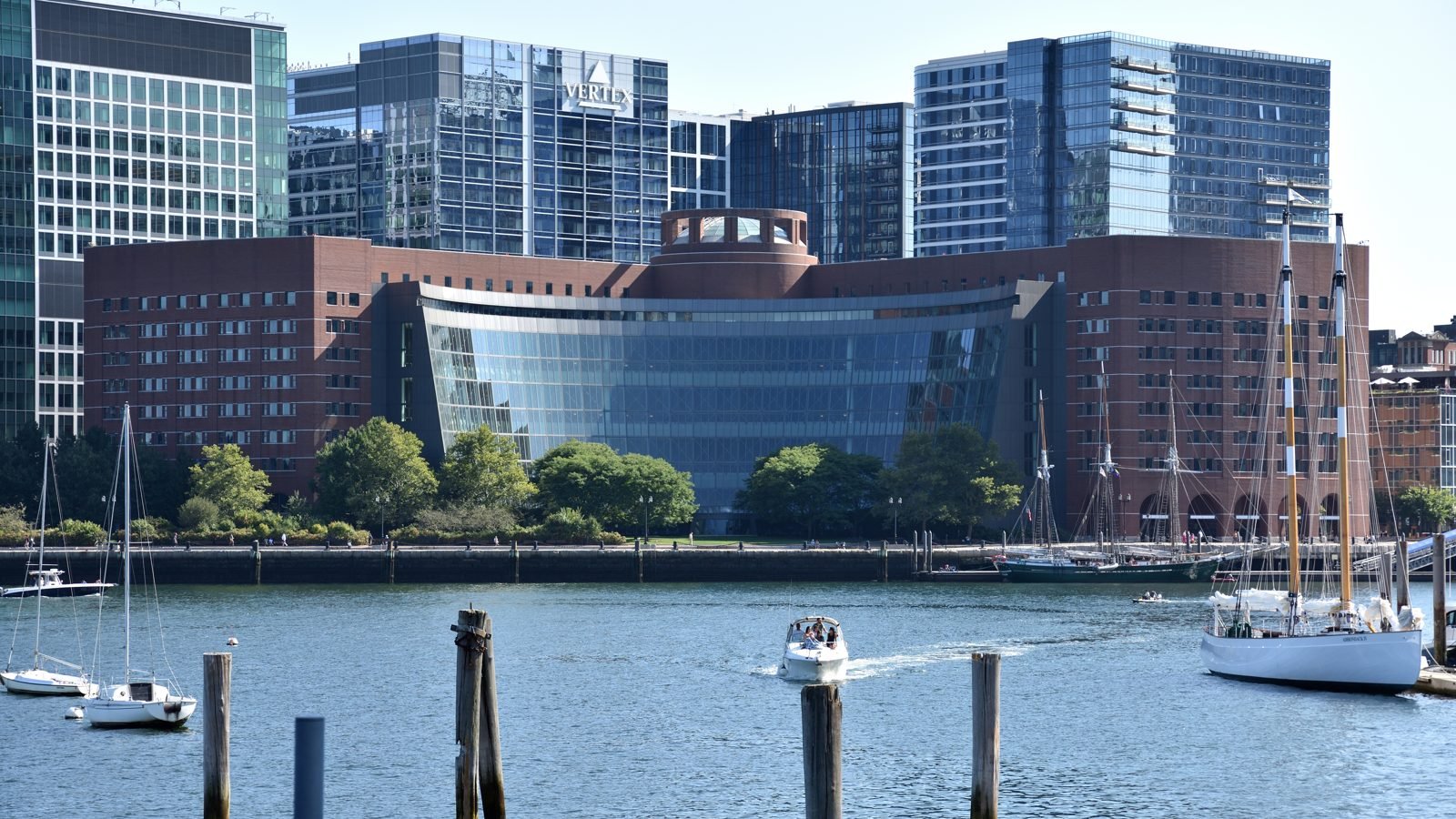
Featured image: John Joseph Moakley U.S. Courthouse in Boston, home of the U.S. District Court for the District of Massachusetts. Photo by 4300streetcar via Wikimedia Commons, licensed CC BY 4.0, cropped.