Will Temporary Protected Status come back for Venezuelans this week? It depends on what the Supreme Court does in the next day or so. On November 18, 2026, the Trump administration filed an emergency application asking the justices to block a San Francisco federal judge’s ruling that set aside the government’s decision to end TPS for Venezuela. Unless a court steps in first, a Ninth Circuit administrative stay that has kept that ruling on hold expires on Friday, November 20, and the government says DHS would then have to restore TPS for hundreds of thousands of Venezuelans.
Here is what the case is about, what each side is arguing, and what Venezuelan TPS holders should watch for as the deadline approaches.
What the government is asking the Supreme Court to do
The case is Mullin v. National TPS Alliance, No. 26A714. According to the Supreme Court docket, the application was filed on November 18 and submitted to Justice Elena Kagan, who handles emergency matters from the Ninth Circuit. She can act on it herself or refer it to the full Court.
In the application, Solicitor General D. John Sauer asks for two things: an immediate administrative stay, which would freeze things briefly while the justices consider the request, and a longer stay that would keep the district court’s order on hold while the government’s appeal moves through the Ninth Circuit and, if needed, back to the Supreme Court. The filing calls this “a remarkable third trip to this Court in the same case.”
How the Venezuela TPS case got here
TPS is a program Congress created in 1990. It lets the Secretary of Homeland Security designate a country when conditions there, such as armed conflict or “extraordinary and temporary conditions,” make return unsafe (8 U.S.C. § 1254a). People covered by a designation cannot be removed, cannot be detained based on their immigration status, and are allowed to work while the designation lasts.
The 2021 and 2023 designations
Then-Secretary Alejandro Mayorkas designated Venezuela for TPS in March 2021 and again in October 2023. In January 2025, days before the change in administration, he extended the 2023 designation for 18 months, through October 2, 2026. Weeks later, then-Secretary Kristi Noem vacated that extension and then terminated the 2023 designation, citing the “national interest” (90 Fed. Reg. 9040, Feb. 5, 2025). She later ended the 2021 designation too, effective November 7, 2025. The application notes that the plaintiffs have not challenged the 2021 termination, so this case is about the 2023 designation.
The lower-court rulings and the first two stays
The National TPS Alliance and individual TPS holders sued under the Administrative Procedure Act. U.S. District Judge Edward Chen first postponed the termination in March 2025, and on September 5, 2025, granted summary judgment setting aside both the vacatur and the termination. The Supreme Court stayed his first order in May 2025 and his final judgment in October 2025, which let the termination take effect while the case continued. SCOTUSblog reports that the Ninth Circuit later upheld Chen’s ruling anyway, in January 2026.
Mullin v. Doe changed the playing field
In June 2026, the Supreme Court decided Mullin v. Doe, a pair of cases over the termination of TPS for Haiti and Syria. As SCOTUSblog summarizes it, the Court held that courts generally cannot review the Secretary’s decision to designate or terminate a country under the TPS program. The government’s application quotes the decision as holding that the TPS statute bars review of “all non-constitutional claims” against those decisions.
The government then asked the Court to send the Venezuela case back to the Ninth Circuit. On October 5, 2026, the justices granted that request, vacated the Ninth Circuit’s judgment, and remanded the case for another look in light of Doe. That ended the Supreme Court’s earlier stay of Chen’s order, which expired when the Court’s mandate issued on November 6.
Why November 20 matters
Once the case returned to the Ninth Circuit, the government asked that court to keep Chen’s order on hold. According to the application, the Ninth Circuit denied a stay on October 30, then on November 3 granted a temporary administrative stay running until November 20 and ordered the parties to file supplemental briefs on the effect of Doe. The government says the appeals court has not acted since.
If nothing happens by Friday, the government says, Chen’s September 2025 order “will spring into effect.” The application warns that DHS would have to “resurrect TPS status for hundreds of thousands of Venezuelans after a nineteen-month hiatus,” that it has been told it may have to release “some 1800 or so” detained Venezuelans, and that it could be blocked from carrying out up to 332 final removal orders. It also says DHS would have to provide work authorization to people whose permits it had ended.
What each side argues
The government
The government’s core argument is that Doe settles the case. Because the plaintiffs’ claims are statutory, not constitutional, the application says the TPS statute “very clearly” takes them out of the courts’ hands. It notes that the plaintiffs told the Ninth Circuit in October that their statutory challenges to the termination “are no longer cognizable after” Doe, while insisting their challenge to the vacatur of the extension survives. The government answers that the termination supersedes the vacatur, and that even if the vacatur were invalid, the termination would at the latest have taken effect when the extension expired on October 2, 2026.
The TPS holders
The plaintiffs’ formal response to the application had not been posted on the docket as of the morning of November 19. In the Ninth Circuit, according to the government’s own summary, they argue that if the vacatur was unlawful, the termination’s April 2025 effective date was wrong too. Speaking to the Associated Press, Emi MacLean, a lawyer for the National TPS Alliance at the ACLU of Northern California, said the administration has no basis for its request: “The lower courts should be able to rule on this question, and they are taking it seriously and they’re moving expeditiously.” Al Jazeera, citing Reuters and AP, reported that the plaintiffs say Venezuelan TPS holders have been detained, separated from U.S.-citizen children and deported since the Court’s earlier intervention.
What could happen next
- An administrative stay. Justice Kagan or the full Court could pause Chen’s order briefly before November 20 while the plaintiffs respond. That would not decide the merits.
- A full stay. The Court could grant the government’s request outright, keeping the termination in effect while the appeal continues. It did this twice before in this case.
- No action before the deadline. If neither the Supreme Court nor the Ninth Circuit acts in time, Chen’s order takes effect and DHS would face the obligations described in the application.
- A Ninth Circuit ruling. The appeals court could still extend its own stay or rule on the government’s motion first.
Whatever happens this week is likely not the last word. The Ninth Circuit still has to decide how Doe applies to the plaintiffs’ remaining claims, and the losing side could return to the Supreme Court. The case fits a wider pattern of high-stakes immigration fights reaching the justices on short timelines, including the Supreme Court case over Trump’s asylum ban. For background on how these policies are shifting, see our overview of changing immigration laws and their global impact.
What Venezuelan TPS holders can do now
USCIS’s Venezuela TPS page, last updated October 20, 2026, is marked as archived and says the 2023 termination took effect after the Supreme Court’s October 2025 order. It also says TPS documents that had stayed valid until October 2, 2026, under an earlier court order are no longer valid. If Chen’s ruling takes effect, expect USCIS to post new guidance; until it does, don’t assume your documents are valid again.
Practical steps include keeping copies of your TPS approval notices, work permits and any court or immigration filings; watching USCIS and the Supreme Court docket rather than social media for updates; and avoiding anyone who promises to “reactivate” TPS for a fee. The site’s guide on how an immigration lawyer can help explains when professional advice makes sense, especially if you have a pending asylum case or a removal order.
FAQ
Is TPS for Venezuela back in effect?
Not as of the morning of November 19, 2026. Judge Chen’s order restoring it is on hold under a Ninth Circuit administrative stay that expires November 20. Whether it takes effect depends on what the Supreme Court or the Ninth Circuit does before then.
Who decides the emergency application?
The application went to Justice Elena Kagan, the circuit justice for the Ninth Circuit. She can grant a short administrative stay on her own or refer the request to the full Court.
Does this case cover the 2021 Venezuela designation?
No. According to the government’s filing, the plaintiffs did not challenge the termination of the 2021 designation, which took effect November 7, 2025. The case concerns the 2023 designation and its 2025 extension.
This article is general information about an ongoing court case, not legal advice. Immigration status depends on individual facts and can change quickly; talk to a licensed immigration attorney or an accredited representative about your situation.
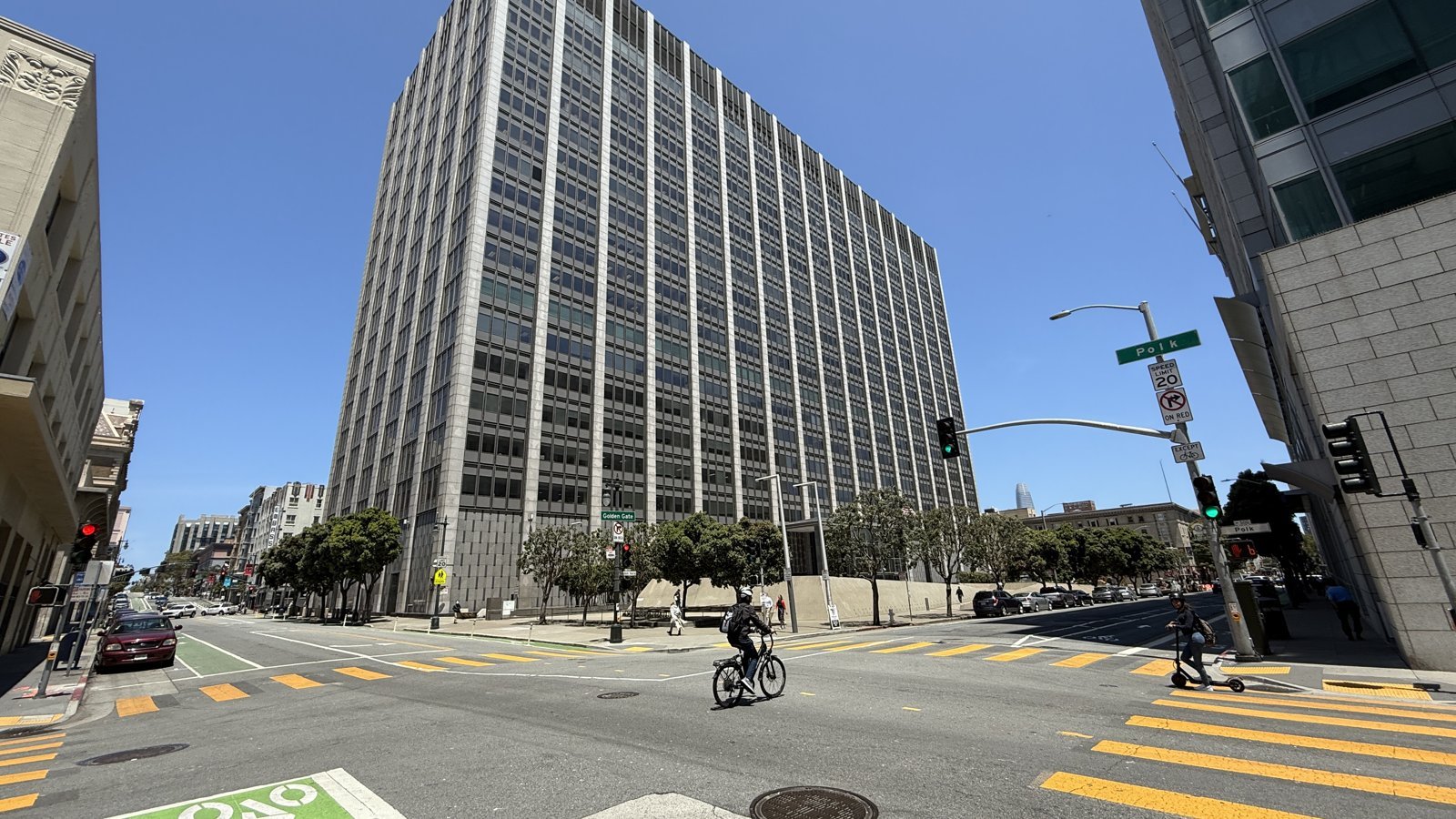
Featured image: Phillip Burton Federal Building and U.S. Courthouse in San Francisco, home of the U.S. District Court for the Northern District of California. Photo by Marincyclist via Wikimedia Commons, licensed CC BY-SA 4.0, cropped.