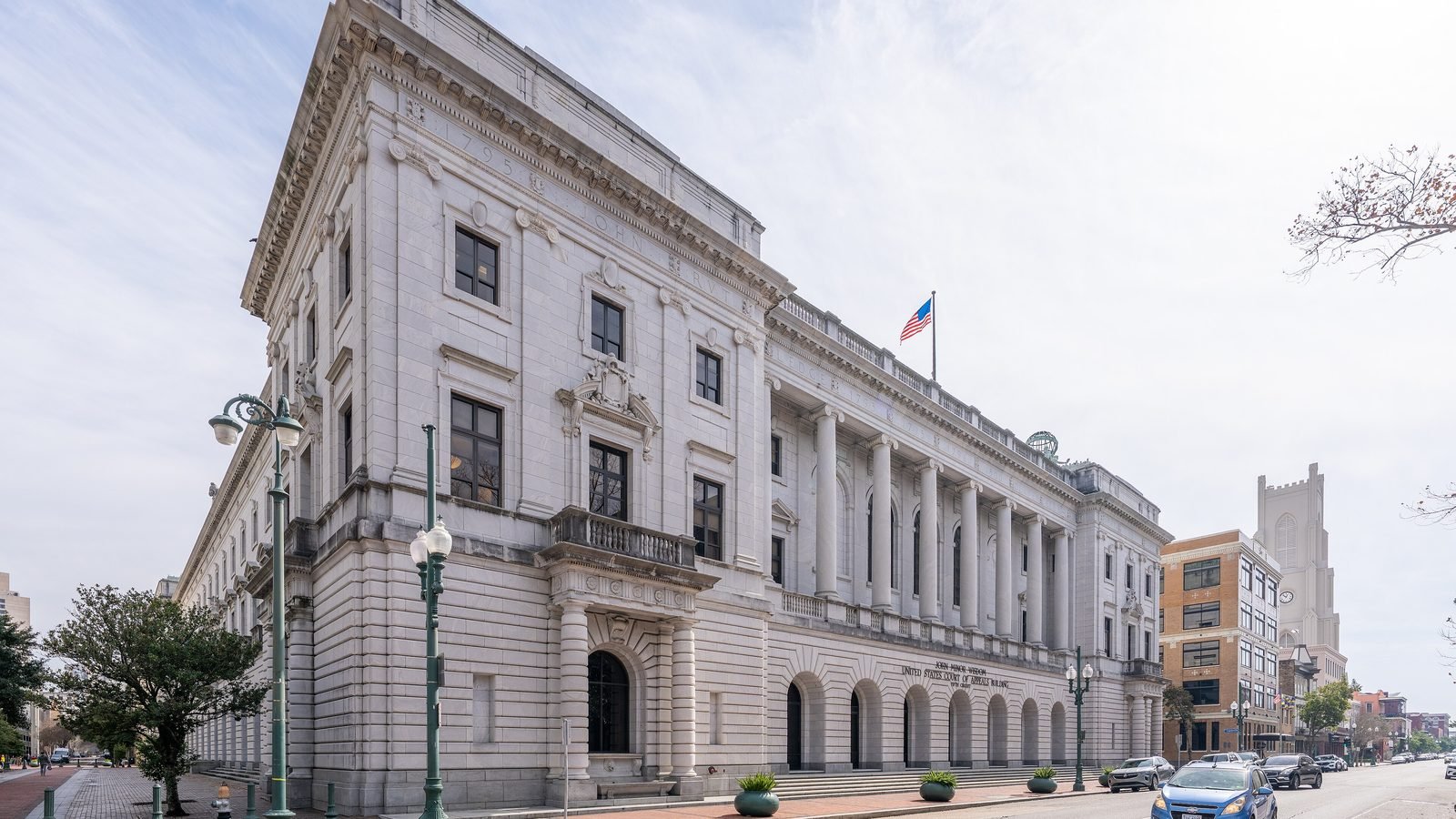
Short answer: The Pregnant Workers Fairness Act (PWFA) has not been repealed, and most pregnant workers are still covered. On Nov. 20, 2026, the full U.S. Court of Appeals for the Fifth Circuit ruled 9-8 that the House broke the Constitution’s Quorum Clause when it passed the 2022 spending package that carried the PWFA, because it counted absent members as “present” by proxy. But the court only affirmed an order that blocks federal enforcement of the PWFA against the State of Texas as an employer. Private employers, local governments and other states are not covered by that order and must still follow the law.
Advocates warn the reasoning could be used to knock out the law in Texas, Louisiana and Mississippi, and the case is widely expected to reach the U.S. Supreme Court. Here is what the court decided, who is affected right now, and what protections pregnant workers still have.
What the Fifth Circuit decided in Texas v. Blanche
The case is State of Texas v. Blanche, No. 24-10386, decided by all 17 active judges of the New Orleans-based appeals court. Texas, through Attorney General Ken Paxton, sued in 2023. It did not attack the whole $1.7 trillion Consolidated Appropriations Act of 2023. It asked only to stop the federal government from enforcing one part of it, the PWFA, against the state.
The facts were not in dispute. During the COVID-19 pandemic, the House adopted House Resolution 965, which let a member record an absent colleague’s vote and presence by proxy, and counted those proxies toward a quorum. According to the opinion, the House passed the spending bill on Dec. 23, 2022, by 225 to 201, and 226 of the 427 members who recorded a vote did so by proxy. That means fewer than half of House members were physically in the chamber.
Writing for the majority, Judge Cory T. Wilson said the Quorum Clause in Article I, Section 5 requires a majority of members to actually be present. “‘Proxy presence’ does not count,” he wrote. The majority also rejected the government’s argument that courts cannot look behind a bill once it is signed and enrolled, a doctrine known as the enrolled-bill rule. The court said that rule did not apply because nobody disputed how the vote happened; the only question was what the Constitution means.
What the court did not decide
The majority stressed the “narrow scope” of its judgment. It said its decision “extends no further than affirming the relief awarded by the district court,” which enjoined “only the enforcement of the PWFA, and only against Texas.” It did not void the rest of the spending law. It also left open whether members joining by videoconference would count as present, calling that “a question not presented in this case.”
The dissent
Eight judges disagreed. Judge James E. Graves Jr., joined by six colleagues, argued that the Constitution lets each chamber decide how to determine who is present, and that “historical practice over the last 235 years strongly favors rejecting the majority’s narrow interpretation.” He also questioned why, if the whole statute was unconstitutionally passed, the judgment covers “only one small sliver of the multi-trillion dollar bill,” and how Texas can block the PWFA “despite accepting millions of dollars under the very same” law. Judge Catharina Haynes dissented separately. Before the full court reheard the case, a divided three-judge panel had sided with the federal government.
Who is affected by the ruling right now?
This is the part that has caused the most confusion, so it is worth being precise.
- Texas state employees: The EEOC and the Justice Department cannot enforce the PWFA against the State of Texas and its agencies. Pregnant workers employed by the state lose the PWFA as a route to an accommodation from their employer, though other laws still apply (see below).
- Private employers in Texas, Louisiana and Mississippi: The order does not cover them. The National Women’s Law Center said the decision “does not change protections under the PWFA or prevent the law from being enforced against any other employer — including any other employer in Texas.” Management-side employment lawyers at Jackson Lewis likewise advised private employers to keep complying.
- Everyone else: Outside the Fifth Circuit, the decision is not binding on other courts, and the PWFA continues to apply to covered employers.
Why do advocates say the law is “effectively” gone in three states? Because a published en banc ruling sets precedent for every federal court in Texas, Louisiana and Mississippi. A Better Balance, which filed a brief in the case, said the decision “effectively erases essential rights to pregnancy accommodations for workers across Texas, Louisiana, and Mississippi.” Jackson Lewis noted that private employers’ own PWFA challenges in the Fifth Circuit had been paused while this case was pending, and it expects those to be decided in line with the new ruling unless the Supreme Court steps in. So the practical reach could grow, but as of now the court order itself is limited to Texas as an employer.
What the PWFA requires
According to the EEOC, the PWFA took effect on June 27, 2023. It applies to private and public employers with 15 or more employees, and requires them to provide a “reasonable accommodation” for a worker’s known limitations related to pregnancy, childbirth or related medical conditions, unless it would cause an “undue hardship,” meaning significant difficulty or expense.
The EEOC lists examples such as extra breaks to drink water, eat or use the restroom; a stool to sit on; schedule changes; telework; temporary reassignment; light duty or help with lifting; leave for health care appointments; and leave to recover from childbirth. Employers also cannot force a worker onto leave when another accommodation would let them keep working, or retaliate against someone for asking. Before the PWFA, many workers had to show a pregnancy-related disability or point to co-workers who got similar treatment, which is part of why its passage was seen as a major change in employment law and worker rights.
What protections still apply if the PWFA doesn’t?
Even where the PWFA cannot be enforced, other laws remain. The EEOC points to:
- Title VII (Pregnancy Discrimination Act): bans discrimination based on pregnancy, childbirth or related conditions, and requires employers to treat pregnant workers the same as others who are similar in their ability or inability to work.
- The Americans with Disabilities Act: requires accommodations for a qualified worker with a disability. Pregnancy itself is not a disability, but some pregnancy-related conditions can be.
- The FMLA: unpaid, job-protected leave for eligible workers at covered employers.
- The PUMP Act: break time and space to express breast milk at work.
State and local laws also matter. The EEOC says more than 30 states and cities have their own pregnancy accommodation laws, and A Better Balance pointed workers in the Fifth Circuit to options including the Louisiana Pregnant Workers Fairness Act. Workers who believe they were denied an accommodation should keep in mind that federal discrimination charges have strict filing deadlines; our guide to the EEOC complaint timeline explains how the 180-day window works. Being fired for asking can also raise issues covered in our look at exceptions to at-will employment.
What happens next
- Supreme Court: Under Supreme Court rules, a petition for review is generally due within 90 days of the judgment, which would be around Feb. 18, 2027, unless a justice extends it. A Better Balance said it expects the case to go to the Supreme Court and called on the administration to defend the law.
- Congress: Jackson Lewis suggested Congress could re-pass the law with a physical quorum to remove any doubt, which would also shore up the act’s other provisions.
- EEOC rules: Employers are also watching for proposed amendments to the EEOC’s 2024 PWFA regulation, which Jackson Lewis said are expected soon.
FAQ
Is the Pregnant Workers Fairness Act still in effect?
Yes, for nearly all covered employers. The Fifth Circuit only affirmed an order barring federal enforcement of the PWFA against the State of Texas. The law has not been repealed.
I work for a private company in Texas. Am I still covered?
The court order does not apply to private employers, and worker advocates and management-side law firms both say private employers should keep complying. Future cases in the Fifth Circuit could change that, so watch for updates.
Why did the court rule the law was passed unconstitutionally?
The majority held that the Constitution requires a majority of House members to be physically present for a quorum, and that proxies cast under the House’s pandemic rule could not be counted. Fewer than half of members were in the chamber when the bill passed.
Did the ruling strike down the whole $1.7 trillion spending law?
No. Texas only challenged the PWFA, and the court said its decision goes no further than the relief the district court granted.
This article is general information about a court decision, not legal advice. If you need an accommodation or think your rights were violated, talk to a licensed employment attorney or contact the EEOC.
Sources: State of Texas v. Blanche, No. 24-10386 (5th Cir. Nov. 20, 2026) (en banc), majority and dissenting opinions; U.S. Equal Employment Opportunity Commission, “What You Should Know About the Pregnant Workers Fairness Act”; Jackson Lewis, Disability, Leave & Health Management Blog via LexBlog (Nov. 22, 2026); National Women’s Law Center statement (Nov. 2026); A Better Balance statement (Nov. 2026); Associated Press (Nov. 2026); The Hill (Nov. 22, 2026); Supreme Court Rule 13. Featured image: John Minor Wisdom U.S. Court of Appeals Building, New Orleans, by ajay_suresh via Wikimedia Commons, CC BY 4.0, cropped.