Short answer: Yes, President Trump’s second birthright citizenship executive order is blocked for the families it targets, at least for now. On Nov. 25, 2026, U.S. District Judge Christopher R. Cooper in Washington, D.C., certified a class and issued a preliminary injunction in Nathan v. Trump that bars the State Department, the Department of Homeland Security and the Social Security Administration from enforcing Executive Order 14418 against class members. The class covers U.S.-born children, born on or after Aug. 6, 2026, with no U.S.-citizen parent and a parent the government puts in one of the order’s three main categories: “alien enemies,” foreign government and international-organization employees, and parents who used commercial surrogacy or “birth tourism.” The government can appeal. Here is what the order tried to do, what the judge decided and who is covered.
How We Got Here: Trump v. Barbara
On his first day back in office in January 2025, President Trump signed Executive Order 14160, which said children born in the U.S. to parents who were unlawfully or only temporarily present were not citizens. On June 30, 2026, the Supreme Court rejected that order 6-3 in Trump v. Barbara. Chief Justice John Roberts wrote that children born in the United States to parents “unlawfully or temporarily present” are “subject to the jurisdiction” of the United States and are citizens at birth under the Fourteenth Amendment’s Citizenship Clause. According to SCOTUSblog, Justices Thomas, Alito and Gorsuch dissented.
The Citizenship Clause says that “all persons born or naturalized in the United States and subject to the jurisdiction thereof” are citizens. Federal law, at 8 U.S.C. § 1401, uses the same words. The Supreme Court’s 1898 decision in United States v. Wong Kim Ark read that language to cover the U.S.-born children of immigrants, with a few narrow historical exceptions.
What Executive Order 14418 Says
On Aug. 6, 2026, about five weeks after Barbara, the president signed Executive Order 14418, “Continuing to Protect the Meaning and Value of American Citizenship,” published at 91 Fed. Reg. 51991. The order says it identifies “certain categories of children of aliens who do not fall within the rule of birthright citizenship as announced by the Supreme Court.” For a person with no U.S.-citizen parent, it tells federal agencies not to recognize citizenship if:
- A parent is an “alien enemy,” which the order defines to include members of a designated Foreign Terrorist Organization or a Specially Designated Global Terrorist group.
- A parent is a “foreign government employee,” which covers ambassadors, foreign nationals who work at their own country’s embassy or consulate, people employed by a foreign government in an official capacity, and staff of international organizations that have immunity, such as the United Nations, the IMF and the World Health Organization.
- A parent “engaged in a commercial transaction to purchase or access birthright citizenship” or in fraud. According to the court, this reaches paid arrangements with U.S.-based surrogates and so-called birth tourism.
- The child was born in a U.S. territory where federal law does not grant citizenship.
Agencies then issued guidance. According to the court’s opinion, Social Security would refuse a Social Security number when it believes a category applies, and the State Department requires each noncitizen parent of a minor passport applicant to sign an attestation under penalty of perjury. DHS also published an interim final rule on Sept. 9, 2026, extending the exclusion that had applied only to children of accredited diplomats to the other foreign government and international-organization employees.
What Judge Cooper Decided
The lawsuit was brought by the ACLU, several ACLU affiliates, the Legal Defense Fund, Asian Law Caucus and Democracy Defenders Fund, according to the ACLU’s announcement. The plaintiffs, who use pseudonyms in court papers, include a couple from France who work for international organizations in Washington and had a baby in August 2026. They also include parents from Australia and Switzerland whose children were born through U.S. surrogacy in October 2026, and expectant parents whose babies are due in early 2027.
In a 67-page memorandum opinion, Cooper wrote that “the President cannot carve out new exceptions to birthright citizenship for children born within the United States and subject to its laws.” He found the plaintiffs likely to win on two grounds:
- The Constitution: The judge said Barbara recognized only narrow exceptions for children who are not subject to U.S. law at birth, such as children of diplomats with full immunity and children of enemy forces occupying U.S. territory. The government, he wrote, does not claim that any group targeted by the order is immune from American law.
- Federal statute: Because Congress copied the Fourteenth Amendment’s wording into the Immigration and Nationality Act, the judge concluded it adopted Wong Kim Ark‘s broad rule and its narrow exceptions. While the Constitution may in theory allow new exceptions, he wrote, “Congress has not authorized any such exceptions.”
The court also refused the government’s request to put the ruling on hold pending appeal, and required only a nominal $1 bond. The order asks the parties to file a joint status report with a proposed schedule by Dec. 4, 2026. That kind of fight over executive power often ends up at the Supreme Court, as with the Trump asylum ban case the justices agreed to hear.
Who the Ruling Covers, and Who It Does Not
The certified class includes all persons born on or after Aug. 6, 2026, who are born in the United States, are not born to a foreign diplomatic officer accredited to the U.S., have no U.S.-citizen parent, and have a parent the government places in sections 2(a) through 2(c) of the order. Key limits:
- Children of accredited diplomats are excluded. The injunction does not protect them.
- The territories provision is not covered. Section 2(d), on people born in U.S. territories, was not part of the class.
- The birth date matters. The judge agreed with the government that the order applies only going forward, and read it to cover people born on or after Aug. 6, 2026.
- It is a preliminary ruling. It lasts while the case continues or until a higher court changes it.
How This Fits With the Maryland Ruling
This is the second court to block the new order. On Sept. 2, 2026, U.S. District Judge Deborah L. Boardman in Maryland issued a preliminary injunction in CASA, Inc. v. Trump protecting a different class: children of mothers who were unlawfully or temporarily present and fathers who were not citizens or green card holders. According to Judge Cooper’s opinion, the government has asked the Maryland court to dissolve or pause that injunction, arguing the class does not match the new order. As Reuters reported, the administration would need to overturn both decisions to enforce the order.
What the White House Says and What Comes Next
A White House spokesperson called the decision “just another ruling from an activist judge” and said the order “is consistent with the holdings and analysis set forth by the Supreme Court,” according to ABC News. The court order states that it is appealable, so the government can ask the U.S. Court of Appeals for the D.C. Circuit to review it. A stay request could also go to the Supreme Court. No appeal had been reported as of Nov. 26, 2026.
For families, the practical effect is that agencies cannot use the order to deny Social Security numbers, passports or other recognition of citizenship to class members while the injunction stands. The case is one of several immigration fights moving through the courts this fall, alongside the Venezuela TPS emergency application at the Supreme Court. For more background, see our overview of how immigration laws and policies are changing.
FAQ
Is birthright citizenship still the law?
Yes. In Trump v. Barbara (June 30, 2026), the Supreme Court held that children born in the U.S. to parents who are unlawfully or temporarily present are citizens at birth. The new ruling blocks a second order that tried to exclude other groups.
Does the ruling protect children born through surrogacy?
Yes, if they fit the class: born in the U.S. on or after Aug. 6, 2026, with no U.S.-citizen parent, and a parent the government places in the order’s commercial-transaction category.
Is the birth tourism visa order blocked too?
No. Executive Order 14419, “Ending Birth Tourism,” signed the same day, deals with visas rather than citizenship documents and was not part of this case.
This article is general information about a court ruling, not legal advice. If you have questions about a child’s citizenship, passport or Social Security number, talk with a licensed immigration attorney or a DOJ-accredited representative.
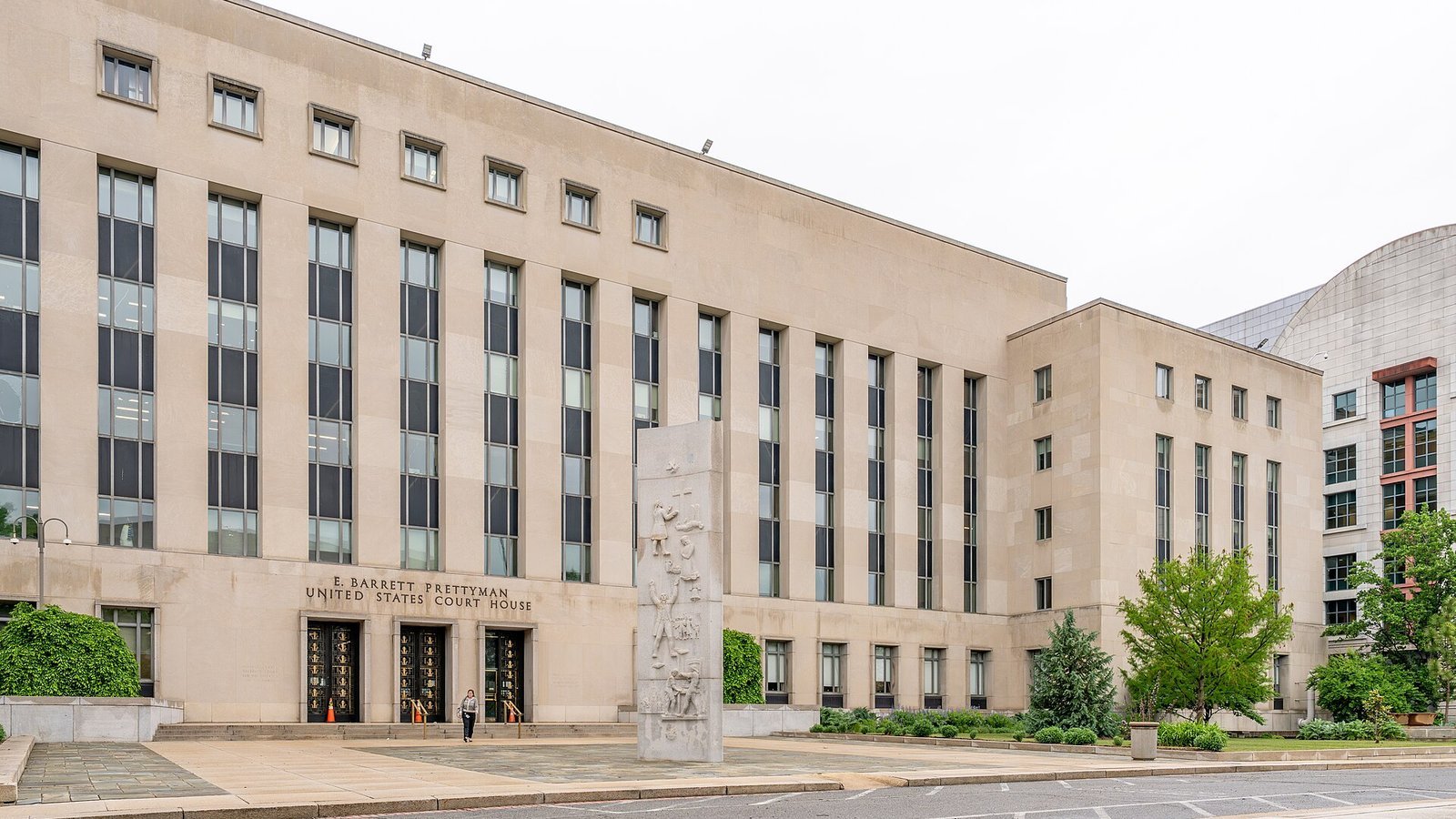
Featured image: E. Barrett Prettyman United States Courthouse, Washington, D.C., home of the U.S. District Court for the District of Columbia. Photo by ajay_suresh via Wikimedia Commons, CC BY 4.0, cropped.