Can you carry a gun in a Maryland state park, on the Metro or into a bar? For now, the answer under state law is still no. On November 16, 2026, the U.S. Supreme Court declined to hear Novotny v. Moore, a Second Amendment challenge to Maryland’s “sensitive places” law. That leaves in place a January 2026 ruling from the Fourth Circuit that upheld most of the state’s location-based gun bans, while striking down one piece: the rule that barred carrying on private property open to the public unless the owner gave permission.
Here is what the Supreme Court did, what the lower court decided, which restrictions are still in force, and why Justice Clarence Thomas signaled the fight is far from over.
What the Supreme Court did on November 16
The case appeared on the Court’s November 16, 2026 order list as Katherine Novotny, et al. v. Wes Moore, Governor of Maryland, et al., No. 25-1324. The order is one line: “The petition for a writ of certiorari is denied.” No justice noted a dissent.
A denial of review is not a ruling on the merits. It does not mean the Supreme Court approved Maryland’s law. It simply means the justices chose not to take this case, so the Fourth Circuit’s decision remains binding in Maryland and the other states in that circuit. As SCOTUSblog noted, the gun case was one of several notable denials that day, alongside a research-funding dispute with the Trump administration and a challenge to California’s bias training rule for doctors.
Where Maryland’s law bans guns
The restrictions come mostly from the Gun Safety Act of 2023, which Maryland passed after the Supreme Court’s 2022 decision in New York State Rifle & Pistol Association v. Bruen expanded the right to carry a handgun in public. Maryland Matters reports that the law was challenged the same day it was signed, in two lawsuits: one by Susannah Warner Kipke and the Maryland State Rifle and Pistol Association, and another by Katherine Novotny, Maryland Shall Issue and the Second Amendment Foundation. U.S. District Judge George L. Russell III combined the cases and, in August 2024, upheld most of the law.
In its January 20, 2026 opinion, reported as Kipke v. Moore, 165 F.4th 194, the Fourth Circuit upheld restrictions on carrying firearms in:
- Government buildings
- Mass transit facilities
- Schools and school grounds
- State parks, state forests and Chesapeake Forest Lands
- Museums
- Healthcare facilities
- Stadiums, racetracks and amusement parks
- Places that sell alcohol for on-site consumption
- Areas within 1,000 feet of a public demonstration
On the last two, the appeals court actually reversed the trial judge, who had blocked them. The panel concluded that bars and restaurants serving alcohol “are among the Nation’s ‘sensitive places’ where firearms may be prohibited,” drawing on historical laws and agreeing with the Ninth Circuit.
The one part that was struck down
Maryland also made it a crime to carry a gun onto someone else’s property unless the owner posted a “clear and conspicuous sign” allowing it or gave express permission (Md. Code, Crim. Law § 6-411(d)). The Fourth Circuit held that rule unconstitutional for private property held open to the public, such as stores. Writing for the court, Judge Roger L. Gregory said that “Maryland’s rule would effectively declare most public places ‘gun-free zones,'” and that “that likely stretches the sensitive places doctrine too far,” according to Maryland Matters.
The court stressed that property owners keep their own right to exclude people with guns. What Maryland could not do was flip the default so that carrying anywhere was a crime unless the owner opted in. The judges said the plaintiffs lacked standing to challenge the rule for private property not open to the public, such as homes, so that part was not decided.
The Supreme Court later reached a similar conclusion about Hawaii. In Wolford v. Lopez, decided June 25, 2026, it struck down a Hawaii law that barred firearms on private property open to the public without the owner’s express consent. The Court’s syllabus describes that kind of law as one that “flips the default rule at common law,” under which the public may enter property held open to it unless the owner says otherwise.
The partial dissent
Judge Steven Agee agreed that schools, government buildings and healthcare facilities are sensitive places where guns can be banned. But he warned that approving the rest of the list would turn the exception into “a broad license to prohibit firearms in locations where people gather for almost any purpose,” as quoted by Maryland Matters.
What Justice Thomas said
Justice Thomas wrote a statement respecting the denial. He said he is “skeptical” that each Maryland law “is consistent with this Nation’s historical tradition of firearm regulation” in “sensitive places.” Even so, he agreed the Court should not take this case: “Because each Maryland statute implicates a distinct historical tradition of firearm regulation, the breadth of petitioners’ challenge would complicate our review.”
He then flagged what he wants next: “In an appropriate and more narrowly focused case, however, we should consider the scope of States’ authority to ban firearms in ‘sensitive places.'” He pointed to New Jersey, New York and California as states with long lists of gun-free locations, and closed by writing that he harbors “serious doubts” that history supports “many of these sweeping restrictions.”
That matters because Bruen itself described the historical sensitive-places tradition as limited, naming examples such as “legislative assemblies, polling places, and courthouses,” and warning that expanding the category “to all places of public congregation” would undercut the right to carry. Lower courts have been left to decide where the line falls, one location at a time. For background on how the broader policy fight has developed, see our overview of the gun control debate in 2025.
What happens next
For now, the Fourth Circuit’s ruling stands, so Maryland can keep enforcing the location bans it upheld. The private-property consent rule remains blocked for property open to the public, though owners can still choose to bar guns themselves.
Gun-rights groups say they will keep litigating. Bill Sack of the Second Amendment Foundation told Maryland Matters that the group was “disappointed” but “encouraged” by Thomas’s statement, and noted that it has a narrower petition pending focused on New York’s ban on carrying in public parks. That is exactly the kind of “more narrowly focused case” Thomas described, so it is worth watching.
Maryland also has local fights. Montgomery County passed its own ordinance banning guns in and near “places of public assembly,” and a federal judge recently dismissed a Justice Department lawsuit against it on procedural grounds. We explained that case in our breakdown of the Montgomery County gun law ruling. Separate challenges to that ordinance are pending at the Fourth Circuit.
It is also worth remembering that where you may carry is a separate question from when force is legally justified. Our guide to self-defense laws covers the basics of that second question.
FAQ
Did the Supreme Court uphold Maryland’s gun law?
No. It declined to review the case. That leaves the Fourth Circuit’s decision in place, but it is not a Supreme Court ruling on whether the law is constitutional.
Can I carry a gun in a Maryland state park?
Under the regulations the Fourth Circuit upheld, carrying is restricted in state parks, state forests and Chesapeake Forest Lands. Check the official rules and any exceptions before you go.
Can I carry into a store in Maryland?
The state’s rule requiring an owner’s sign or permission for private property open to the public was struck down. Owners can still prohibit guns on their own property, and other state laws on who may carry still apply.
Could the Supreme Court take up sensitive places later?
Yes. Justice Thomas wrote that the Court should consider the issue “in an appropriate and more narrowly focused case,” and a petition about New York’s park ban is pending.
This article is general information about a court case, not legal advice. Gun laws vary by location and change often; check official Maryland sources or consult a licensed Maryland attorney about your situation.
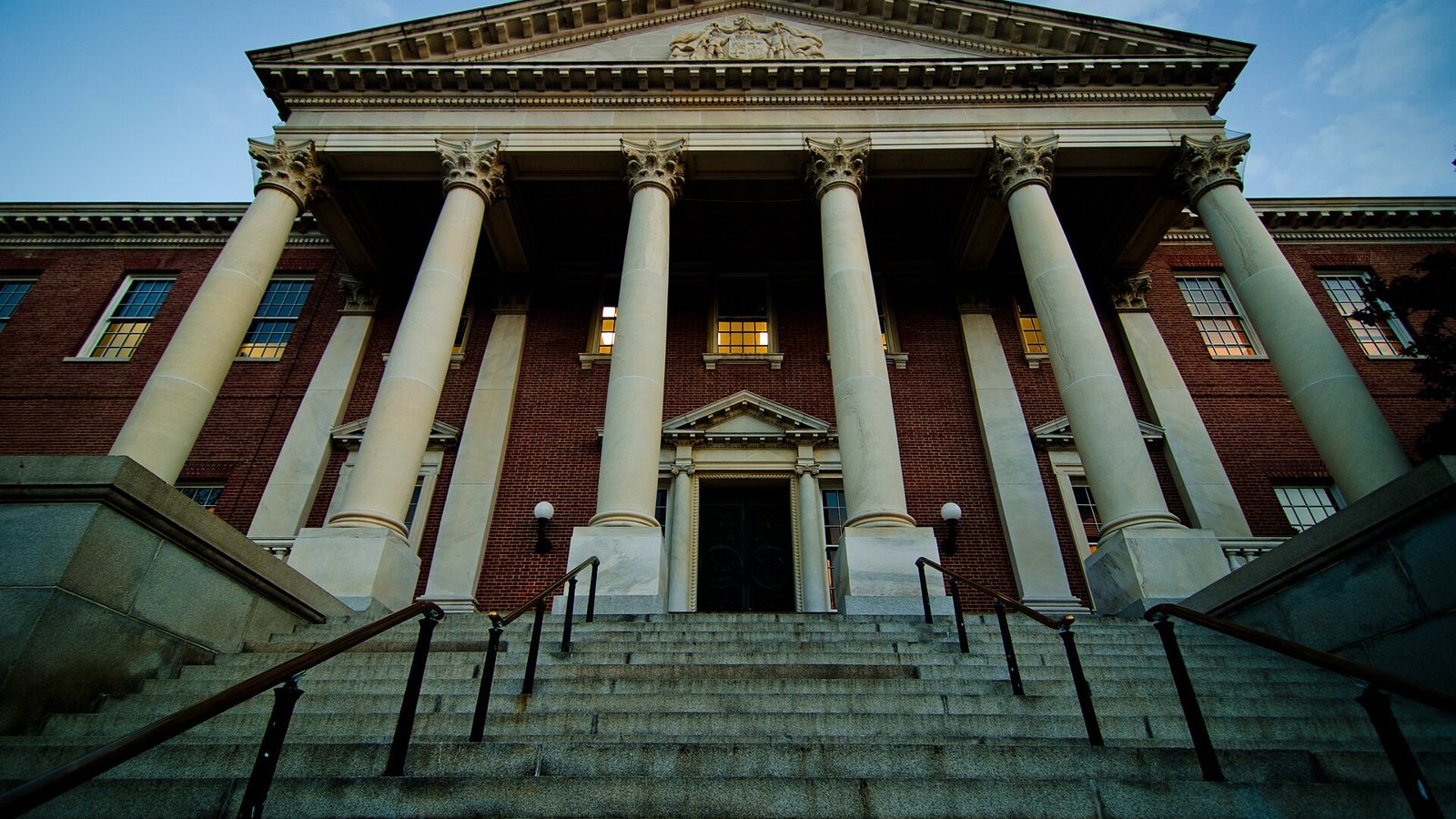
Featured image: Maryland State House in Annapolis. Photo by Kevin Galens via Wikimedia Commons, licensed CC BY-SA 2.0, cropped.