Short answer: Yes, the rent freeze stands for now. On Nov. 25, 2026, Manhattan Supreme Court Justice Brendan T. Lantry dismissed a landlord lawsuit against the New York City Rent Guidelines Board’s 0% guideline, leaving the freeze in place for roughly 1 million rent-stabilized apartments. If you rent a stabilized apartment and your one- or two-year lease renewal starts between Oct. 1, 2026, and Sept. 30, 2027, the guideline increase is zero. The landlords say they are “considering next steps,” so an appeal is still possible.
Here is what the court decided, why the judge upheld a policy he openly criticized, what the freeze does and does not cover, and what could happen next.
What the Rent Guidelines Board Actually Approved
The Rent Guidelines Board (RGB) is the nine-member city panel that sets the maximum annual increases for rent-stabilized leases. On June 25, 2026, it adopted Apartment and Loft Order #58, which sets the adjustment at 0% for one-year leases and 0% for two-year leases that begin on or after Oct. 1, 2026, and on or before Sept. 30, 2027. The order says the same levels apply to units in buildings receiving the 421-a tax exemption.
For comparison, the city’s NYC311 rent increase page lists the previous year’s guidelines, for leases that began between Oct. 1, 2025, and Sept. 30, 2026, as 3% for a one-year lease and 4.5% for a two-year lease. According to Realtor.com, the board’s vote was 7-1, and 6sqft reports it was the first time the board approved 0% for both lease terms.
A freeze on rent-stabilized renewals was a central campaign promise of Mayor Zohran Mamdani, who appointed six of the board’s members. That connection is what the landlords’ lawsuit was about.
Why Landlords Sued
The challenge was brought by seven limited liability companies, led by Kenilworth Holdings LLC, that own rent-stabilized buildings in Brooklyn, Queens, Staten Island and the Bronx, according to Courthouse News Service. Their lawyer is Randy Mastro, the former first deputy mayor under Eric Adams.
The landlords argued that the board ran a “sham process” to deliver the mayor’s campaign pledge and that it “ignored evidence of soaring landlord costs and manipulated the data to understate the impact of these costs,” as The Guardian reported. They pointed to figures showing building operating costs rose 5.3% in the most recent year and are projected to rise another 4.1%. They asked the court to order the board to hold a new vote, Gothamist reported.
The judge let the landlords dig for evidence. He ordered city officials to turn over emails and texts between City Hall and board members and staff. Mastro released about a dozen of those exchanges and called them “shocking.” According to Gothamist, they mostly showed officials telling new members about their appointments, coordinating meeting dates and planning a presentation on a “true cost of living” report. The city’s top lawyer, Steven Banks, said nothing in them was improper. The Legal Aid Society intervened in the case on behalf of tenants.
What the Judge Decided and Why
The key to the ruling is the legal standard. A court reviewing a decision like this one does not ask whether the policy is good. In Justice Lantry’s words, as quoted by The Guardian, “the court’s review is not whether the Board’s determination was wise or if it may cause negative collateral consequences to the overall real estate market.” The question is whether the order has a rational basis, meaning it is not “unreasonable, arbitrary, or capricious.”
The judge found the landlords “failed to establish” that the board’s order failed that test. He concluded the freeze “has a rational basis and must therefore be upheld as valid.” On the independence argument, he called the landlords’ claims “without merit” on the current record and wrote that board members sharing the mayor’s politics “is of no moment and does not indicate any level of collusion.”
The judge’s criticism of the mayor
The ruling was not a blanket endorsement. Lantry wrote that “such comments, promises and guarantees to freeze the rent were reckless and irresponsible,” and that “the mayor of the city of New York has no authority to unilaterally raise, ‘freeze’ or otherwise adjust the rent of stabilized units in this city — that responsibility is within the power of the board and the board alone.” He also acknowledged that the freeze “may have detrimental impacts on the New York City residential real estate industry.”
But without proof that the board simply adopted the campaign promise instead of doing its own evaluation, he said the mayor’s calls to freeze the rent were “inconsequential to this proceeding.” Or as he put it: “Elections have consequences.”
What the Rent Freeze Means for Tenants
If you live in a rent-stabilized apartment, here is how the guidelines in Order #58 work in practice:
- Renewal leases: If your one- or two-year renewal lease starts between Oct. 1, 2026, and Sept. 30, 2027, the guideline increase is 0%. Your renewal rent is based on the lawful rent as of Sept. 30, 2026.
- Preferential rents: NYC311 notes that since June 14, 2019, a tenant paying a preferential (lower than legal) rent must be offered renewals with guideline increases based on the preferential rent. With a 0% guideline, that rent should not go up at renewal either.
- Other increases can still apply: The order applies “together with such further adjustments as may be authorized by law.” Separately approved increases, such as Major Capital Improvement (MCI) or Individual Apartment Improvement (IAI) increases, are not wiped out by the freeze.
- Market-rate apartments are not covered: The RGB does not set rents for unregulated apartments or for subsidized housing, according to NYC311. Those rents are negotiated between landlord and tenant.
If a renewal offer shows a guideline increase above 0% for a lease starting in this window, ask the landlord to explain it in writing. You can check your apartment’s registered rent history with New York State Homes and Community Renewal, the state agency that enforces rent stabilization. For a broader overview, see our guide to landlord-tenant rights.
What It Means for Landlords
Owners of stabilized buildings cannot collect a guideline increase on renewals starting in the Order #58 period while the ruling stands. Small Property Owners of New York board president Ann Korchak called the decision “terribly disappointing” and told Gothamist the freeze “will push more small rent-stabilized property owners to the edge of the cliff.” Realtor.com noted that the board’s own 2026 Income and Expense Study found operating and maintenance costs took roughly 71 cents of every dollar of revenue in 2024, a figure that excludes mortgage payments and major capital costs.
This is the second New York housing ruling in a matter of days. The state’s highest court recently addressed landlords who refuse housing vouchers, covered in our explainer on the Court of Appeals’ Section 8 discrimination ruling.
What Happens Next
Mastro said in a statement that he and his clients are “continuing to review the ruling and considering next steps.” In New York, an appeal from the Supreme Court in Manhattan goes to the Appellate Division, First Department. No appeal had been announced as of Nov. 26, 2026. Unless a higher court steps in, the 0% guideline applies to renewals in the current lease window.
The freeze does not change any other tenant protection. If you are behind on rent or facing a case in Housing Court, the rules on notices and court process still apply. Our guide on what to do when you receive an eviction notice covers the basics.
FAQ
Is the NYC rent freeze still in effect?
Yes. The Nov. 25, 2026, ruling dismissed the landlords’ lawsuit, so the 0% guideline in Order #58 remains in place unless an appeals court changes it.
Does the rent freeze apply to my apartment?
Only if your apartment is rent-stabilized and your one- or two-year lease starts between Oct. 1, 2026, and Sept. 30, 2027. Market-rate apartments are not covered.
Can my landlord still raise my rent?
Not by a guideline increase for a lease in that window. Increases approved separately under the law, such as MCI or IAI increases, may still apply.
Did the judge say the rent freeze was a good idea?
No. He said the court’s job was only to decide whether the board acted rationally and within its authority, not whether the policy was wise. He criticized the mayor’s campaign promise but upheld the board’s decision.
Can the landlords appeal?
Yes. Their lawyer says they are considering next steps. An appeal would go to the Appellate Division, First Department.
This article is general information about a court ruling and New York rent rules, not legal advice. For questions about your lease or rent, contact NYS Homes and Community Renewal, a tenant organization or a licensed attorney.
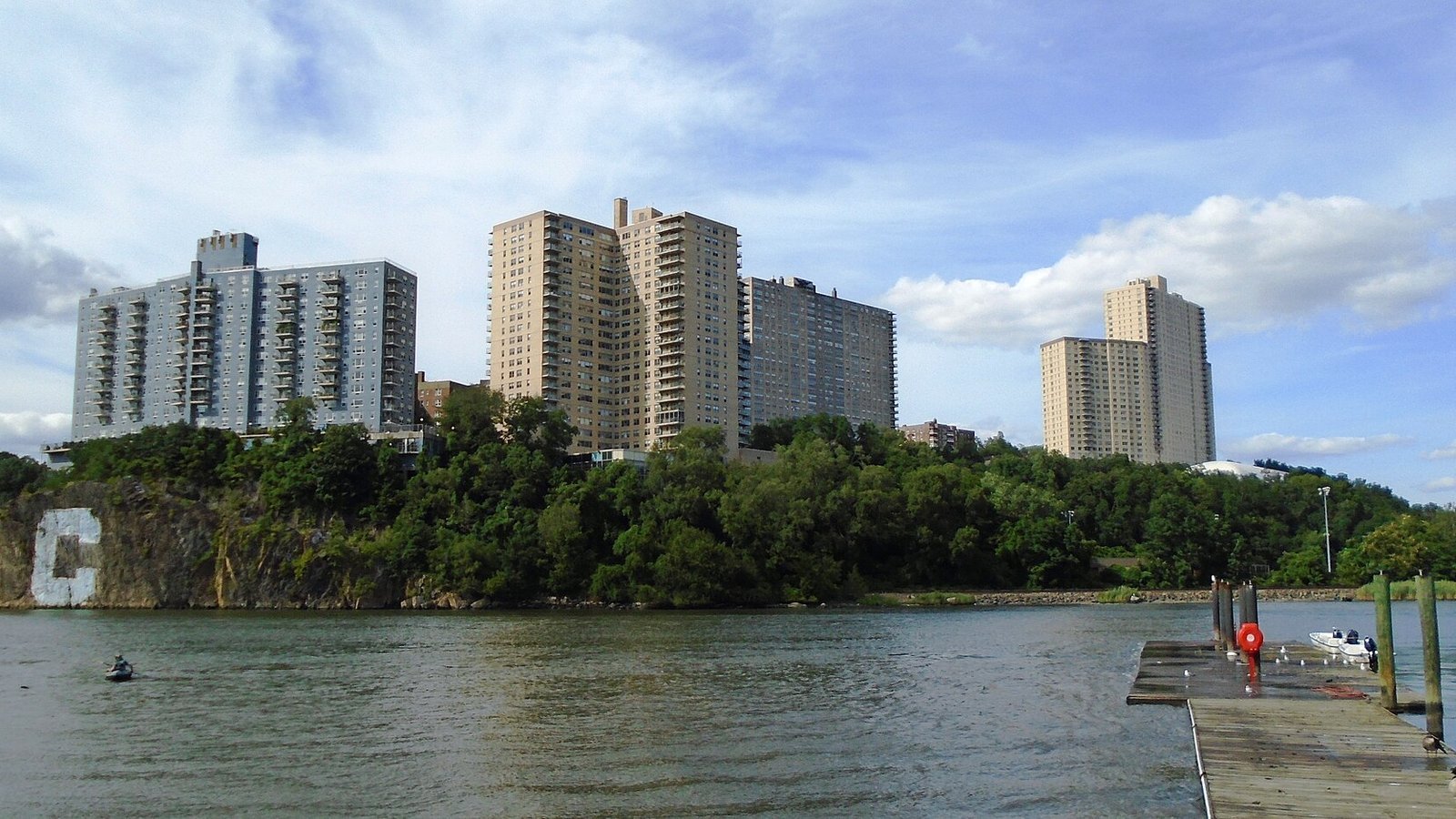
Featured image: Apartment buildings in the Bronx along the Harlem River. Photo by Beyond My Ken via Wikimedia Commons, CC BY-SA 4.0, cropped.