A federal appeals court has ruled that SpaceX cannot force eight fired engineers into private arbitration. On November 10, 2026, the U.S. Court of Appeals for the Ninth Circuit held that the engineers’ case falls under the Ending Forced Arbitration of Sexual Assault and Sexual Harassment Act of 2021 (EFAA), so it can go forward in open court even though each of them signed an arbitration agreement. The 2–1 decision in Holland-Thielen v. SpaceX also answers a question many workers are now asking: how much do you have to allege before the EFAA lets you skip arbitration?
Here is what the court decided, what the law says, and what it could mean for employees and employers with arbitration clauses.
What Happened in the SpaceX Case
According to the Ninth Circuit’s published opinion, the eight plaintiffs are former SpaceX employees who wrote and circulated an “Open Letter” to company management. The letter raised concerns about the work environment and focused on Elon Musk’s posts on Twitter (now X), which the employees described as sexual harassment. The opinion says SpaceX fired four of the authors the day after the letter circulated, giving as its reason their role in “conceiving, writing, and distributing the Open Letter.” The other four were fired in the following weeks after an internal investigation.
Courthouse News Service reports the firings took place in 2022, and Reuters reports the engineers sued in 2024. Their claims under California law include hostile work environment, failure to prevent harassment and retaliation, gender discrimination and retaliatory termination. Retaliatory termination is the one claim all eight share. SpaceX has denied the allegations, Reuters reports, and none of them has been proven in court.
SpaceX moved the case from state court to federal court and then asked the judge to send it to arbitration under the Federal Arbitration Act, pointing to agreements the employees signed when they were hired. U.S. District Judge John A. Kronstadt refused, and SpaceX appealed.
What the EFAA Says
Congress passed the EFAA after a wave of reports about workplace sexual misconduct. As the Ninth Circuit notes, lawmakers were concerned that confidential arbitration was keeping that misconduct out of public view. The law amended the Federal Arbitration Act, which normally makes arbitration agreements “valid, irrevocable, and enforceable.” Other workplace laws Congress passed in 2022 are also being tested in court, including the Pregnant Workers Fairness Act, which the Fifth Circuit found was passed without a valid quorum.
Two short sections do most of the work:
- 9 U.S.C. § 402(a) says that, at the election of the person alleging a sexual harassment or sexual assault dispute, no predispute arbitration agreement or joint-action waiver is “valid or enforceable” for a case that “relates to” that dispute.
- 9 U.S.C. § 401(4) defines a “sexual harassment dispute” as “a dispute relating to conduct that is alleged to constitute sexual harassment under applicable Federal, Tribal, or State law.”
The choice belongs to the worker. An employee covered by the EFAA can still choose arbitration, but the employer cannot force it. The law applies to disputes or claims that arise or accrue on or after March 3, 2022.
The Key Question: How Strong Must the Allegations Be?
SpaceX argued that the word “alleged” in the definition means “adequately alleged.” In other words, before a worker can use the EFAA, the harassment allegations would have to be strong enough to survive a motion to dismiss under the federal pleading standard from Ashcroft v. Iqbal and Bell Atlantic v. Twombly. SpaceX said Musk’s posts were not severe or pervasive enough to count as a hostile work environment. It also argued that the employees could not “bootstrap” their retaliation claims into the EFAA.
The majority: “allege” means assert
Judge Michelle T. Friedland, joined by Judge Danielle J. Forrest, rejected that reading. Relying on ordinary and legal dictionaries, the majority held that “conduct that is alleged to constitute sexual harassment” means “conduct that is asserted to amount to sexual harassment.” Courts must look at whether the complaint describes conduct the plaintiff asserts is a basis for a sexual harassment claim. They do not decide at this stage whether the claim would win or survive dismissal.
The court pointed out that when Congress wants a “fails to state a claim” standard, it usually says so. “Congress could have easily drafted the EFAA” that way, Judge Friedland wrote, and the fact that it didn’t is “strong evidence” it did not mean to import the pleading standard.
Retaliation counts
The court also held that retaliation for opposing alleged sexual harassment is itself a “sexual harassment dispute,” because it is a dispute “relating to” conduct alleged to be harassment. The Second Circuit reached a similar conclusion in Olivieri v. Stifel, Nicolaus & Co. (2024). Because each of the eight plaintiffs challenges a firing allegedly tied to the Open Letter, each one met the “relates to” test. Under the Ninth Circuit’s earlier ruling in Ding v. Structure Therapeutics, that keeps the entire case in court, not just the harassment-related claims.
The majority did add a limit: a “cursory or peripheral reference” to harassment is not enough. The harassment allegations must be part of the misconduct the plaintiff is actually seeking relief for.
The dissent
Judge Eric C. Tung dissented. He would require plaintiffs to plead facts that, if true, would amount to sexual harassment under the law. He warned that under the majority’s test, “a plaintiff can escape an arbitration agreement if his complaint so much as purports to allege a sexual harassment dispute.” He offered a hypothetical: an employee fired after a fight over the office cafeteria could label it harassment to avoid arbitration. The majority answered that Rule 11 sanctions and ordinary motions to dismiss exist to deal with frivolous claims.
What the Ruling Means for Workers and Employers
The decision is binding on federal courts in the Ninth Circuit, which covers California, Washington, Oregon, Arizona, Nevada, Idaho, Montana, Alaska, Hawaii, Guam and the Northern Mariana Islands. In practical terms:
- Workers with arbitration clauses who allege sexual harassment, or who say they were punished for reporting or opposing it, have a clearer path to court in those states. The National Women’s Law Center, which filed an amicus brief backing the employees, had argued the whole case belonged in court.
- Employers can’t defeat the EFAA at the arbitration stage just by arguing the harassment claim is weak. They can still file a motion to dismiss on the merits, which is a separate fight.
- Retaliation claims tied to harassment complaints, like the ones that commonly come up in whistleblower and retaliation disputes, are treated as part of the protected category.
It does not mean the engineers have won. The ruling only decides where the case is heard. Whether SpaceX harassed or illegally fired anyone is still to be decided in district court. Our guide to exceptions to at-will employment explains why firing someone for opposing unlawful conduct is one of the classic limits on an employer’s right to fire.
What Happens Next
SpaceX could ask the full Ninth Circuit to rehear the case en banc or ask the U.S. Supreme Court to take it. As of the first reports on November 10, SpaceX had not responded to requests for comment from Reuters or Courthouse News, so it isn’t known whether it will appeal. If it doesn’t, or if further review is denied, the case returns to Judge Kronstadt’s court in Los Angeles to proceed on the merits.
The ruling settles a question the Ninth Circuit says its own earlier EFAA cases had left open, and the split panel shows judges can read the same few words very differently. For a wider look at how workplace rules are changing, see our overview of employment law trends and worker rights.
FAQ
Can my employer force me to arbitrate a sexual harassment claim?
Under the EFAA, a predispute arbitration agreement can’t be enforced against a person alleging a sexual harassment or sexual assault dispute if that person chooses court instead. The law covers claims that arose or accrued on or after March 3, 2022.
Does the EFAA cover retaliation for reporting harassment?
The Ninth Circuit (in this case) and the Second Circuit (in Olivieri) have both held that retaliation for reporting or opposing alleged sexual harassment qualifies as a “sexual harassment dispute.”
Do I have to prove the harassment first?
Not in the Ninth Circuit. The complaint must describe conduct the worker asserts is sexual harassment and that is central to the case. Proof comes later, in court.
Does the whole lawsuit stay in court, or only the harassment claim?
In the Ninth Circuit, once a plaintiff properly invokes the EFAA, the entire case stays in court, including related claims such as discrimination.
This article is general information about a court ruling and the law. It is not legal advice. If you are dealing with an arbitration agreement or a workplace harassment issue, speak with a licensed employment attorney in your state.
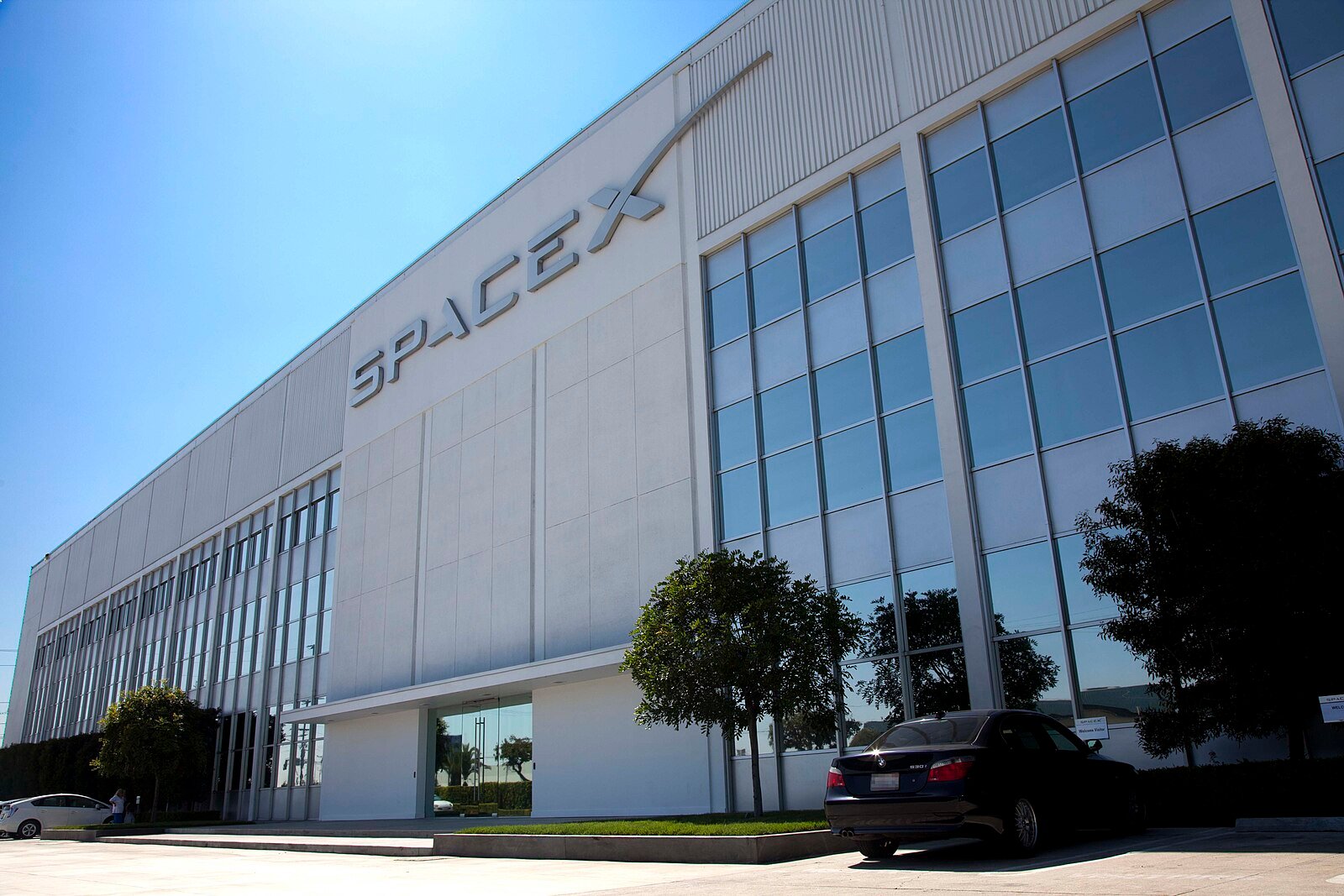
Featured image: SpaceX headquarters in Hawthorne, California. Photo by SpaceX, released under CC0 via Wikimedia Commons.