A federal judge in Florida has refused to throw out President Donald Trump’s defamation lawsuit against the BBC. On November 10, 2026, U.S. District Judge Jeffrey T. Kuntz ruled that Trump’s claim over a spliced clip in a Panorama documentary can move forward, while dismissing a second claim under Florida’s consumer-protection law. The ruling does not mean the BBC defamed Trump. It means his lawsuit, which seeks at least $10 billion according to Reuters, has cleared the first legal hurdle and now heads toward evidence-gathering.
Here is what the court actually decided, the legal standards behind it, and what comes next.
What the Trump v. BBC Lawsuit Is About
The case, Trump v. British Broadcasting Corp. (No. 1:25-cv-25894, S.D. Fla.), centers on a 12-second segment in the BBC documentary Trump: A Second Chance, which aired on October 28, 2024, a week before the presidential election.
According to the court’s 40-page order, the segment showed Trump telling supporters on January 6, 2021: “We’re going to walk down to the Capitol and I’ll be there with you. And we fight. We fight like hell and if you don’t fight like hell, you’re not going to have a country anymore.” The order explains that those words came from two parts of his Ellipse speech delivered nearly 55 minutes apart. The edit also left out a line, said shortly after the “fight like hell” remark, in which Trump told the crowd they would be “marching over to the Capitol building to peacefully and patriotically make your voices heard.”
The BBC’s chairman later apologized in a letter, quoted in the order, saying the editing “gave the mistaken impression that you had made a direct call for violent action. That was an editorial error and it should not have happened.” Reuters reports that the BBC has admitted the edits were misleading but denies it is liable for defamation, and that a leaked internal memo about the edit led to high-level resignations at the broadcaster.
What the Judge Ruled
The BBC asked the court to dismiss the case on two main grounds: that Trump failed to state a valid claim, and that a Florida court has no power over a London-based broadcaster. Judge Kuntz granted the motion in part and denied it in part:
- Defamation claim (Count I): survives. The BBC must file an answer by December 1, 2026.
- Florida Deceptive and Unfair Trade Practices Act claim (Count II): dismissed.
- Personal jurisdiction: the court found it has jurisdiction over the BBC for this case.
The judge stressed the limited nature of the decision: “Whether President Trump can prove these claims and establish he sustained damages at summary judgment or trial is left for another day.”
Why the defamation claim survived
At the motion-to-dismiss stage, a court must accept the complaint’s allegations as true and ask only whether they state a plausible claim. Under the Eleventh Circuit standard the judge cited, a public-figure plaintiff must allege publication, falsity, actual malice, actual damages, and a defamatory statement. If you want a refresher on the basics, our guide to slander vs. libel covers how defamation works in general.
The BBC raised three arguments against the claim. The court rejected all three:
- Actual damages. Florida does not presume damages in defamation cases against media defendants, so Trump must plead real harm. The court found he did so by alleging reputational harm from a documentary released close to an election. “It would be difficult for the Court to accept a different framing without completely negating the significance and fragility of political elections,” Kuntz wrote.
- Actual malice. This is the demanding standard from New York Times Co. v. Sullivan (1964): a public figure must show the publisher knew a statement was false or acted with reckless disregard for the truth. The judge said that “on its face, the editing may independently establish the plausibility of actual malice,” adding that “this was not trimming around the edges but creating something different than what was stated in the speech.” He also allowed Trump’s allegations about other BBC coverage to count as circumstantial evidence of the broadcaster’s state of mind at this early stage.
- Opinion. The BBC argued the segment reflected an opinion about how Trump’s speech was received. The court disagreed, holding that a spliced segment creating a sentence Trump “never spoke” is a statement of fact, not protected opinion.
Why the consumer-protection claim was dismissed
Florida’s Deceptive and Unfair Trade Practices Act (Fla. Stat. ch. 501, part II) applies to conduct “in the conduct of any trade or commerce.” Relying on the Eleventh Circuit’s decision in Tobinick v. Novella, the judge held that a news organization’s commercial purposes do not turn its editorial content into commercial speech. The documentary is not an advertisement for goods or services, so the claim failed.
Why a Florida court can hear a case against the BBC
The BBC argued it did not broadcast the documentary in the United States and tried to block viewers outside the U.K. The court noted that simply posting content online is not enough to create jurisdiction everywhere it can be viewed. But it found “something more” here, based on the complaint’s allegations: Trump lives in Florida, parts of the documentary were filmed there, the BBC identified Florida as an area of focus, and the BBC allegedly sent a viewing link to a Florida resident. The judge called it “disingenuous” for the BBC to argue it could not have anticipated being sued in Florida. These jurisdiction facts are disputed, and the BBC may continue to contest them.
How This Case Differs From Trump’s Other Media Suits
The order itself compares the case with two other Trump suits in the same federal district. In the CNN case, a judge found the challenged statements were opinion, not false facts, and the Eleventh Circuit affirmed. In a suit against Dow Jones, publisher of the Wall Street Journal, a judge dismissed claims that the paper failed to investigate what it reported; the order notes that an appeal is pending. Kuntz drew a line: “Those cases involved a news entity reporting on a story. Here, the news entity created the story.”
That distinction matters. Defamation law protects opinion and substantially true reporting, but altered quotations can be treated differently. In Masson v. New Yorker Magazine (1991), cited in the order, the Supreme Court addressed when changed quotes can support a libel claim, focusing on whether the alteration materially changes the meaning of what the speaker said. For a broader look at where the legal lines fall for false content, see our explainer on the legal consequences of fake news and misinformation.
How Both Sides Reacted
The BBC said in a statement reported by The Guardian: “We are surprised by this decision but respect the Court’s authority and note the case will now proceed to the next stage. We remain confident in our position and will continue to respond through the proper legal process.”
Trump called the ruling a “huge victory” in a Truth Social post, according to Reuters and The Guardian.
What Happens Next
- BBC’s answer due December 1, 2026. The court ordered the broadcaster to respond formally to the defamation count by that date.
- Discovery. Both sides will exchange documents and take depositions. The Guardian reports that a magistrate judge ruled in late October that Trump must sit for a deposition by BBC lawyers by December 11.
- Summary judgment or trial. To win, Trump will have to prove, not just allege, actual malice and actual damages. Actual malice must be shown with clear and convincing evidence, a high bar that defeats many public-figure libel suits.
- Possible appeals. A denial of a motion to dismiss usually cannot be appealed right away, so any appeal would typically come after a final judgment.
Frequently Asked Questions
Did the judge rule that the BBC defamed Trump?
No. The judge ruled only that Trump’s complaint plausibly states a defamation claim. Whether the BBC is liable depends on the evidence at summary judgment or trial.
What is “actual malice”?
It is the constitutional standard public figures must meet in defamation cases. It means the publisher knew the statement was false or seriously doubted its truth, not that it disliked the person. The order notes that ill will alone does not prove actual malice, though it can be weighed as circumstantial evidence.
How much is Trump seeking?
Reuters reports the lawsuit seeks at least $10 billion. The ruling did not address the amount of damages.
Why was the Florida trade practices claim thrown out?
The judge held that a documentary is editorial content, not commercial speech, so Florida’s Deceptive and Unfair Trade Practices Act does not apply.
Can people outside the U.K. be sued over content they publish online?
It depends on the facts. U.S. courts generally require more than online availability; they look at whether the publisher deliberately reached into the state. Our guide to defamation and libel online explains the general rules.
This article is general information about a pending court case, not legal advice. For advice about a specific situation, talk to a licensed attorney in your jurisdiction.
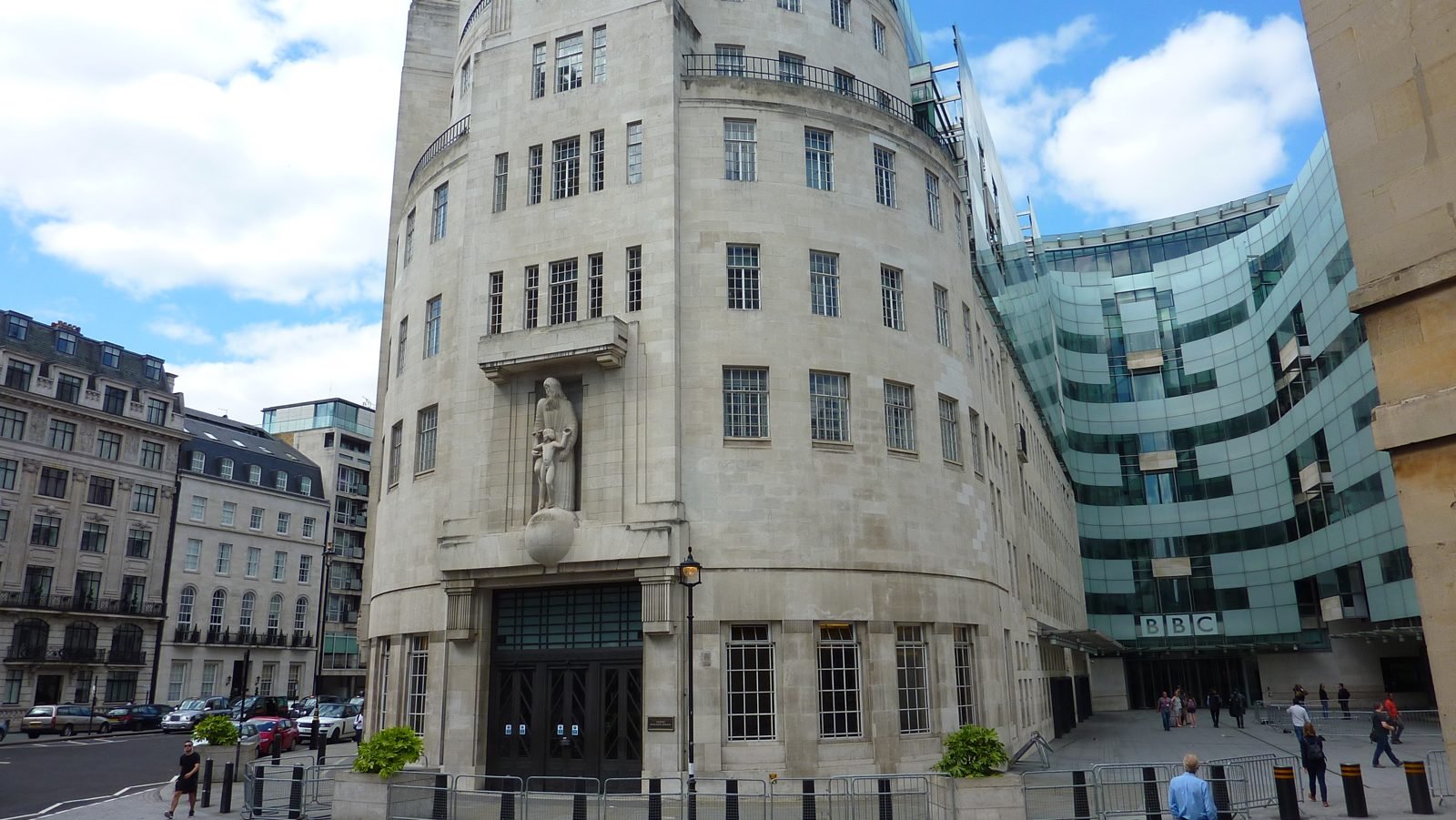
Featured image: BBC Broadcasting House, Portland Place, London, by Richard Cooke, via Wikimedia Commons, licensed CC BY-SA 2.0.