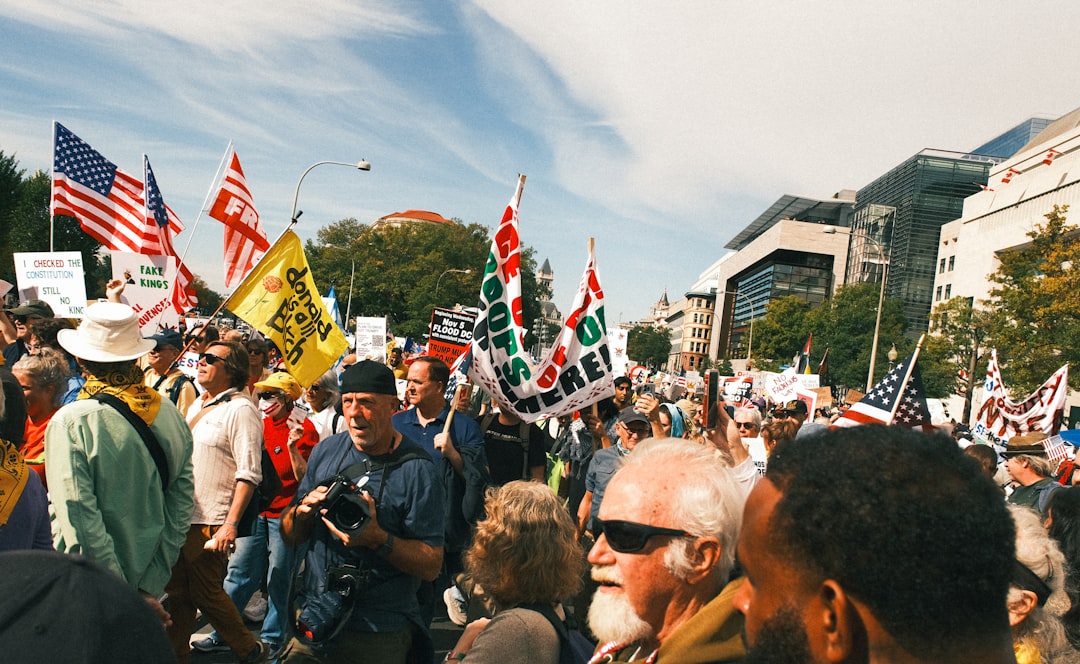
Political polarization, a phenomenon characterized by the increasing divergence of political attitudes among the populace, leading to a widening chasm between opposing ideological camps, has profound and multifaceted implications for both the legal and social fabric of a nation. This essay will explore these implications, examining how heightened polarization impacts governmental function, undermines democratic processes, and erodes social cohesion.
Political polarization exerts significant pressure on the fundamental tenets of the legal system. The judiciary, ideally a neutral arbiter, finds itself increasingly entangled in partisan conflicts, raising concerns about its independence and the perceived legitimacy of its rulings.
Judicial Appointments and Partisan Battles
The process by which judges are appointed to the bench, particularly at higher levels of the judiciary, has become a focal point of political contention.
The Weaponization of the Confirmation Process
In highly polarized environments, the confirmation hearings for judicial nominees can transform into ideological battlegrounds. Senators from opposing parties often scrutinize nominees not solely on their legal qualifications and experience, but on their perceived political leanings and potential judicial philosophy. This can lead to prolonged and acrimonious confirmation processes, with accusations of obstructionism and unfairness hurled from both sides. The focus shifts from a careful evaluation of judicial fitness to a strategic attempt to shape the future composition of the courts in line with a particular party’s agenda. This can result in delays in filling crucial judicial vacancies, leaving courts understaffed and potentially impacting the timely administration of justice.
The Erosion of Bipartisan Consensus
Historically, judicial appointments often involved a degree of bipartisan cooperation, recognizing the need for experienced and respected individuals to serve on the bench, regardless of minor ideological differences. However, escalating polarization has diminished the likelihood of such consensus. Parties may view judicial seats as spoils to be claimed by their own ideology, rather than as positions requiring national unity and broad public trust. This zero-sum approach to judicial appointments can create a perception that the judiciary is no longer an impartial institution, but rather an extension of the political branches.
Interpretations of Law and Constitutional Doctrine
The way laws and constitutional principles are interpreted can also be heavily influenced by political polarization, leading to divergent legal outcomes and undermining consistency.
Ideological Lenses on Legal Precedent
Judges, like all individuals, are shaped by their experiences and perspectives. In a polarized climate, these perspectives can be amplified and weaponized within legal discourse. Instead of focusing on established legal precedent and neutral legal analysis, judges might be perceived as interpreting laws and constitutional provisions through the distorted lens of their political ideology. This can result in conflicting rulings on similar issues, creating legal uncertainty and making it difficult for individuals and businesses to understand their rights and obligations. For example, landmark Supreme Court decisions have, in recent decades, been deeply divided along ideological lines, reflecting the broader societal polarization.
The Politicization of Judicial Review
Judicial review, the power of courts to assess the constitutionality of laws and actions taken by the executive and legislative branches, is a cornerstone of many legal systems. However, in a polarized environment, the exercise of judicial review can become highly politicized. Rulings that strike down legislation favored by one party or uphold legislation opposed by another are often framed not as legal decisions based on constitutional principles, but as partisan attacks or endorsements. This can erode public trust in the judiciary’s impartial role and lead to calls for radical reforms, such as term limits for judges or eliminating the power of judicial review altogether, which could have destabilizing effects on the rule of law.
Social Fragmentation and the Erosion of Civility
Political polarization extends beyond the halls of government and the courtroom, deeply impacting the social fabric of a nation and fostering a climate of mistrust and animosity.
The Deepening Divide Within Communities
The chasm between political ideologies can manifest itself in increasingly fractured communities, where individuals find it difficult to engage with those holding opposing viewpoints.
Echo Chambers and Filter Bubbles
The rise of social media and the fragmentation of traditional media outlets have contributed to the formation of ideological echo chambers. Individuals tend to consume information that confirms their existing beliefs and are less exposed to alternative perspectives. Algorithms further exacerbate this by feeding users content that aligns with their engagement history. This creates filter bubbles, where individuals are insulated from dissenting opinions, reinforcing their own biases and making them less likely to understand or empathize with those on the other side. This can lead to a hardening of positions and a reluctance to engage in constructive dialogue.
Interpersonal Strains and Social Segregation
Political differences, once a private matter or a topic of polite disagreement, can now become a source of significant interpersonal strain. Friendships, family relationships, and even professional connections can be strained or broken due to irreconcilable political views. This can lead to a form of social segregation, where individuals increasingly self-select into communities and social circles composed of like-minded people, further reducing opportunities for cross-ideological interaction and understanding. This phenomenon can be observed in geographic sorting, where people with similar political beliefs tend to live in the same neighborhoods.
The Decline of Shared National Identity
A healthy democracy relies on a degree of shared national identity, a sense of common purpose and belonging that transcends political differences. Polarization can actively erode this foundation.
“Us vs. Them” Mentality
Political polarization often fosters an “us vs. them” mentality, where opposing groups are not just seen as holding different opinions, but as fundamentally misguided, immoral, or even dangerous. This dehumanization of the “other” makes compromise and collaboration exceedingly difficult. When one’s political opponents are viewed as enemies, the idea of a shared national project becomes increasingly untenable. The focus shifts from collective problem-solving to tribalistic defense of one’s own group.
Erosion of Trust in Institutions and Each Other
As political divisions deepen, so too does the erosion of trust in the institutions that are meant to serve the public good. This can include government agencies, the media, educational institutions, and even scientific bodies, all of which can be perceived as biased or captured by one political faction or another. Equally concerning is the decline in interpersonal trust. When individuals view those with differing political beliefs with suspicion and antagonism, the very foundation of a civil society is weakened. This lack of trust makes collective action and civic engagement much more challenging.
The Impact on Governance and Policy-Making
The practical consequences of political polarization are perhaps most acutely felt in the realm of governance, where the ability to enact meaningful policy and address national challenges is severely hampered.
Legislative Gridlock and Inaction
The most visible symptom of polarization on governance is legislative gridlock, where partisan divisions make it nearly impossible to pass laws.
The Rise of Partisan Obstructionism
In a polarized environment, political parties may view obstruction of the opposing party’s agenda as a strategic victory, rather than a failure to govern. Tactics such as filibusters, extended debate, and the refusal to consider legislation can become commonplace. This is not simply a difference of opinion on policy, but a deliberate strategy to prevent the other side from achieving its goals, even if those goals might address pressing societal needs. The incentive structure shifts away from compromise and towards ideological purity and adversarial tactics.
The Difficulty of Addressing Complex Issues
Many of the most pressing challenges facing nations today – climate change, economic inequality, healthcare reform, national security – are complex and require nuanced solutions. Polarization creates an environment where such issues become overly simplified and politicized, making it difficult to engage in the kind of thoughtful deliberation and compromise necessary to forge effective policy. Instead of seeking evidence-based solutions, debates can devolve into partisan posturing, with policy proposals judged not on their merit, but on their political expediency or the party that champions them. This inaction can have significant long-term consequences for the well-being of the nation.
The Erosion of Executive and Legislative Accountability
Polarization can also undermine the mechanisms of accountability between the branches of government.
Diminished Oversight and Checks and Balances
When the executive and legislative branches are controlled by opposing parties, checks and balances can become highly politicized. Oversight committees might be seen as tools for partisan attack rather than genuine mechanisms for ensuring accountability. Similarly, if the same party controls both the executive and a significant portion of the legislature, oversight can be weakened if the dominant party is unwilling to challenge a president or administration of its own party. This can lead to a decline in transparency and an increase in the potential for abuse of power.
The Influence of Special Interests and Extremist Factions
In a highly polarized environment, the moderate voices within political parties can be drowned out by more ideologically extreme factions and well-funded special interests. These groups can exert disproportionate influence, pushing for policies that benefit their narrow agendas rather than the broader public good. This can lead to policy outcomes that are not reflective of the will of the majority of the populace but rather of the most vocal and organized partisan groups.
The Impact on Democratic Norms and Institutions
Beyond the immediate legal and social ramifications, political polarization poses a fundamental threat to the health and stability of democratic itself.
The Undermining of Electoral Integrity and Legitimacy
The increasingly adversarial nature of politics can lead to a questioning of electoral processes and outcomes.
Allegations of Fraud and Disputed Results
In highly polarized elections, losing parties are more likely to allege widespread fraud or irregularities, even in the absence of credible evidence. This can sow seeds of doubt about the integrity of the electoral process, undermining public confidence in election results. The refusal to accept legitimate outcomes can lead to political instability and challenges to the peaceful transfer of power, a cornerstone of democratic governance.
The Radicalization of Political Discourse
Polarization often fuels more extreme and inflammatory rhetoric, pushing political discourse further away from reasoned debate and closer to outright hostility. This can normalize aggressive tactics and discourage participation by those who are not willing to engage in such confrontational environments. The demonization of opponents can make constructive dialogue and the finding of common ground exceedingly difficult, further entrenching divisions.
The Erosion of Democratic Deliberation and Compromise
Democracy, at its core, is a system that relies on deliberation and compromise. Polarization actively works against these principles.
The Breakdown of Discursive Norms
The norms of respectful political discourse and compromise, essential for a functioning democracy, can be severely damaged by intense polarization. When opposing sides view each other not as fellow citizens with different ideas but as enemies, the very idea of finding common ground becomes anathema. This can lead to a permanent state of political stalemate and a decline in the ability of a society to collectively address its problems.
The Threat to Institutions of Democratic Governance
Ultimately, unchecked political polarization can pose a threat to the very institutions that uphold democracy. When citizens lose faith in elections, in the judiciary, and in the legislative process, they may become increasingly disillusioned with democratic forms of government. This can create fertile ground for authoritarian appeals and the erosion of democratic norms and practices, leading to a gradual or even rapid decline of democratic freedoms and the rule of law. The long-term implications for political stability and individual liberties are profound and warrant careful consideration and proactive efforts to counteract these corrosive trends.
FAQs
What is political polarization?
Political polarization refers to the divergence of political attitudes to ideological extremes. It occurs when people’s political beliefs and values become more and more divided, leading to a lack of common ground and compromise.
What are the legal implications of political polarization?
Political polarization can lead to gridlock in legislative bodies, making it difficult to pass laws and policies. It can also result in increased partisanship in the judiciary, affecting the impartiality of legal decisions.
What are the social implications of political polarization?
Political polarization can lead to increased social division and hostility between individuals and groups with differing political beliefs. It can also contribute to a breakdown in civil discourse and a lack of understanding and empathy for opposing viewpoints.
How does political polarization impact democracy?
Political polarization can weaken democratic institutions by undermining the ability to reach consensus and govern effectively. It can also lead to a lack of trust in the political system and a decrease in voter turnout.
What are some strategies to address political polarization?
Some strategies to address political polarization include promoting media literacy and critical thinking skills, fostering dialogue and understanding between opposing groups, and encouraging bipartisan cooperation in government. Additionally, promoting policies that reduce economic inequality and social division can help mitigate political polarization.