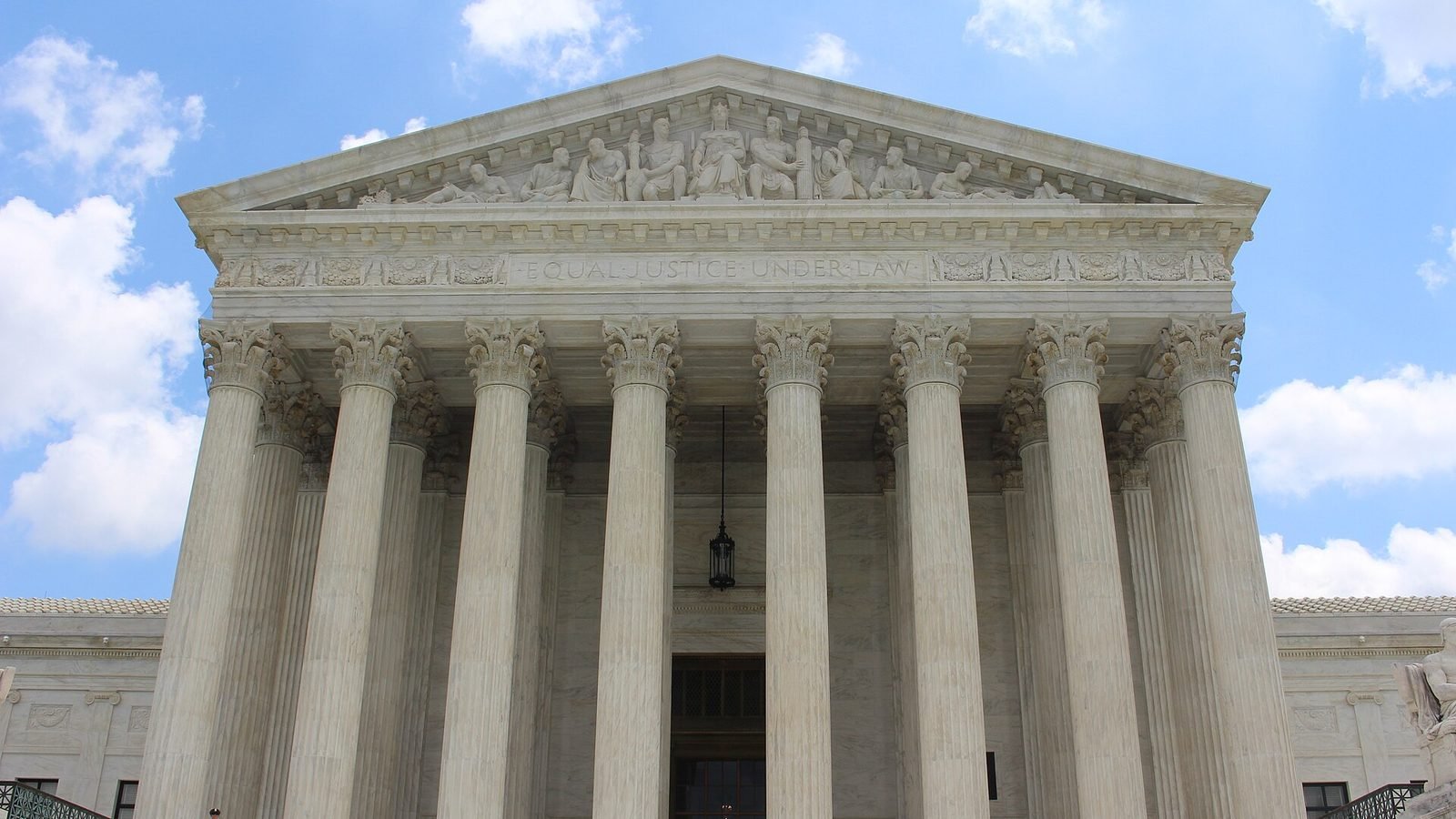
The U.S. Supreme Court will hear arguments on Wednesday, December 2, 2026, on whether states and local governments can ban AR-15-style rifles. The consolidated cases, Khaya v. Cook County (until this week called Viramontes v. Cook County) and Grant v. Higgins, challenge Cook County, Illinois’ assault weapons ordinance and Connecticut’s post-Sandy Hook ban. The question the justices agreed to decide is short: whether the Second and Fourteenth Amendments “guarantee the right to possess AR-15 platform and similar semiautomatic rifles.”
The case also picked up a procedural twist days before argument. The lead plaintiff asked to leave the case, Cook County asked the Court to dismiss it as moot, and on November 24 the justices put off that question until after argument. Here is what the case is about, what each side argues and what could happen next.
This article is general information about a pending court case, not legal advice. Gun laws vary by state and city; if you have questions about what you may lawfully own or carry, check your state’s official guidance or talk to a lawyer.
What the Supreme Court is deciding
The Court granted review on June 30, 2026, combined the Illinois and Connecticut cases, and set aside one hour of argument in total. According to the SCOTUSblog case page, the Court in November also granted the U.S. Solicitor General’s request to take part in the argument as a “friend of the court.”
It is the first time the Court has taken up a ban on AR-15-style rifles since its two landmark Second Amendment rulings: District of Columbia v. Heller (2008), which struck down a handgun ban, and New York State Rifle & Pistol Association v. Bruen (2022), which said a gun law is valid only if it is consistent with the nation’s historical tradition of firearm regulation. Lower courts have split sharply on how those rulings apply to rifles, a debate we covered in our overview of the changing gun control landscape.
The two laws being challenged
- Cook County, Illinois. Cook County’s ordinance makes it a crime to possess an “assault weapon,” a term defined both by a list of named firearms (including the AR-15) and by features such as certain grips and stocks. According to Connecticut’s Attorney General, the county first enacted the ban in 1993 and amended it in 2013.
- Connecticut. Connecticut first passed an assault weapons ban in 1993 and expanded it in 2013 after the Sandy Hook Elementary School shooting. The state says the 2013 update added the AR-15 by name and banned semiautomatic centerfire rifles that accept a detachable magazine and have even one listed feature, such as a folding or telescoping stock, a pistol grip, a forward grip or a flash suppressor. The Justice Department’s brief notes that Connecticut’s law grandfathers certain rifles owned before the ban took effect.
What the lower courts said
In the Connecticut case, a federal district court refused to block the law, and the Second Circuit affirmed in August 2025. As the Justice Department’s brief describes that ruling, the Second Circuit assumed AR-15s are “arms” but held that Connecticut could ban them because they are “especially dangerous,” have “military-style features” and have limited usefulness for self-defense.
In the Illinois case, the district court ruled for Cook County and the Seventh Circuit affirmed. Both courts were bound by the Seventh Circuit’s 2023 decision in Bevis v. City of Naperville, which upheld Illinois’ AR-15 restrictions on the theory that these rifles are “military-grade” weapons that fall outside the Second Amendment’s protection. The Supreme Court declined to review Bevis in 2024.
Why the case name changed, and the mootness fight
On October 29, Cutberto Viramontes, the Cook County resident who had been the named plaintiff since the case was filed in 2021, asked to be dismissed from the case without giving a reason, SCOTUSblog reported. Cook County then argued the case should be dismissed as moot, saying it was doubtful the remaining challengers had a legal right to sue. The county pointed out that the remaining individual plaintiff, Christopher Khaya, said he wanted an IMI Galil rifle, which it argues is not the kind of AR-15-style rifle covered by the question before the Court.
The challengers responded that the question covers “similar” semiautomatic rifles, too, and that Khaya also wants an AR-15-platform rifle. On November 23 the Court dismissed Viramontes from the case, and the next day it issued a one-line order deferring the mootness request “pending oral argument,” citing its 2023 decision in Acheson Hotels v. Laufer.
In practical terms, even if the justices later find the Illinois case moot, the Connecticut case raises the same question, so the Court can still reach the core issue.
What each side argues
The challengers and the Justice Department
The challengers, backed by gun-rights groups including the Firearms Policy Coalition and the Second Amendment Foundation, say the answer comes straight from Heller: the government cannot ban arms that are “in common use” by law-abiding people for lawful purposes. In their opening brief, they quote the Court’s own 2025 description of the AR-15 as “the most popular rifle in the country.” In a reply brief filed November 20, reported by Reason, they argue the Court cannot rule for Connecticut and Cook County “without overruling the core holdings of Heller and Bruen.”
The federal government is siding with the challengers. The Justice Department’s brief says AR-15s are lawful under federal law and in 40 states, and that most owners keep them for self-defense, hunting and target shooting. It also disputes the comparison to the military’s M16, noting that the M16 can fire in bursts or fully automatically, while the AR-15 fires one shot per trigger pull.
Connecticut and Cook County
The governments argue that popularity does not settle the question. In its brief, Cook County says AR-15-platform rifles are “offensive weapons of war designed for maximum lethality” that are “not customarily used for self-defense,” and that its ordinance fits a long tradition of restricting unusually dangerous weapons, from Bowie knives to trap guns. It calls the challengers’ common-use approach “unworkable.”
Connecticut makes a similar historical argument. Attorney General William Tong’s office says its brief traces bans on unusually dangerous weapons from fourteenth-century England to the present, points to the rifles’ disproportionate use in mass shootings, and warns that a pure common-use test would create a “use-it-or-lose-it” rule that protects any weapon once enough units are sold. Connecticut will be represented at argument by former U.S. Solicitor General Elizabeth Prelogar.
What could happen, and who would be affected
There are several possible outcomes:
- The bans are struck down. If the Court holds that AR-15-style rifles are protected because they are in common use, similar bans in other states and cities would face strong challenges.
- The bans are upheld. A ruling that governments may restrict “unusually dangerous” weapons would give legislatures more room to pass or keep these laws.
- A narrower ruling. The Court could clarify how to apply Bruen‘s history test and send the cases back to the lower courts, or resolve the Illinois case on mootness and decide only the Connecticut case.
The question presented is about the rifles themselves. It does not ask the Court to decide limits on magazine capacity, though any reasoning about “common use” could influence those cases later. Nothing changes until the Court rules: the bans stay in effect while the case is pending, and decisions in argued cases usually come by the end of June or early July 2027, though the Court has not set a date.
The Court has turned away other gun cases recently. Earlier this month, for example, it declined to hear a challenge to Maryland’s sensitive-places carry law, and a federal judge separately dismissed the Justice Department’s lawsuit over Montgomery County’s gun law. The AR-15 cases are different because the Court chose to take them up and will decide the merits.
Frequently asked questions
When is the Supreme Court AR-15 argument?
Wednesday, December 2, 2026, at 10 a.m. Eastern. The Court posts audio of its arguments on its website.
Does this case ban or legalize AR-15s nationwide?
No. The case asks whether the Constitution allows Cook County’s and Connecticut’s bans. A ruling would set a national rule on that constitutional question, but it would not itself create a federal ban or override every state gun law.
Is the AR-15 an “assault rifle”?
The laws use the term “assault weapon” and define it by lists of models and features. The challengers and the Justice Department stress that the AR-15 is semiautomatic, unlike the military’s M16. The governments argue that its design still makes it unusually lethal.
Sources: Supreme Court question presented, No. 25-238; Supreme Court order (Nov. 24, 2026); SCOTUSblog (Nov. 24, 2026); SCOTUSblog case docket; U.S. amicus brief; Cook County brief; Connecticut Attorney General (Oct. 21, 2026); Reason (Nov. 24, 2026). Featured image: U.S. Supreme Court Building, by Claire Anderson via Wikimedia Commons (Unsplash), CC0, cropped.