Short answer: Not automatically. On Nov. 25, 2026, the Supreme Court of Virginia ruled in Ginevan v. Commonwealth that Virginia’s felon gun ban, Code § 18.2-308.2, violated the Second Amendment as applied to one man, Derek Wade Ginevan, and threw out his conviction. The court held that a felony conviction alone does not remove someone from “the people” protected by the Second Amendment, and that the state must show a court has found the person “poses a credible threat to the physical safety of another” before it can disarm them for good. But the justices called the decision “a narrow one.” The statute is still on the books, and the federal ban on gun possession by people with felony convictions is untouched. Here is what the court decided, what it did not decide and what could happen next.
What Happened in the Ginevan Case
According to the court’s opinion, written by Justice Wesley G. Russell Jr., police responded to a possible domestic disturbance on Jan. 24, 2023, in Frederick County. A woman said Ginevan had grabbed a shotgun and pointed it at her. Ginevan admitted having the shotgun but denied pointing it at her and said he kept it for protection. Because he had prior felony convictions, he was charged under Virginia’s felon-in-possession law.
His record included a 2011 conviction for possession with intent to distribute a Schedule I/II drug, three felony probation violations, and 2018 convictions for obtaining money by false pretenses and possession of ammunition by a convicted felon. Virginia law classifies that last offense as a “violent felony,” though the opinion notes none of his other felonies carry that label, and the state conceded at oral argument that the drug conviction was not violent.
Ginevan moved to dismiss the charge on Second Amendment grounds. The trial court refused, he entered a conditional guilty plea that preserved the constitutional issue, and the Court of Appeals of Virginia affirmed in 2024. That court treated the legislature’s “violent felony” label as enough to show he was dangerous.
What the Supreme Court of Virginia Decided
The seven-member court reversed. Courthouse News reported the ruling was unanimous. The opinion makes three main moves.
1. People with felony convictions are still part of “the people”
The court pointed out that nobody argues a felony conviction strips someone of First Amendment or Fourth Amendment rights, which also belong to “the people.” It concluded that, “as a matter of language and logic,” a felony conviction does not remove a person from “the people” in the Second Amendment either. That means the state has to justify the ban under the history-based test from New York State Rifle & Pistol Association v. Bruen (2022).
2. The history did not support a blanket, permanent ban
Under Bruen, the government must show a law fits “the Nation’s historical tradition of firearm regulation.” The court wrote that statutes banning felons from having guns “are a creature of twentieth century legislatures,” and that the state could not offer “even one example” from the relevant era of a law disarming all felons or even all violent felons. The court also said the U.S. Supreme Court’s past comments approving felon gun bans, starting with District of Columbia v. Heller, were dicta rather than binding holdings. It relied in part on the high court’s 2026 decision in United States v. Hemani, where the majority said it was not addressing the federal felon ban, 18 U.S.C. § 922(g)(1).
3. Dangerousness has to be shown, and the record here did not show it
Drawing on United States v. Rahimi (2024), the court said the state can disarm someone a court has found “pose[s] a credible threat to the physical safety of another.” It is the state’s burden to make that showing. Ginevan’s earlier ammunition conviction did not require any such finding, and the court called § 18.2-308.2 “an extremely broad statute” that applies the same way to someone holding “a single bullet” as to someone with an arsenal. Because the case ended in a plea, the trial record said nothing about the facts behind his old convictions. The court refused to consider new details the state tried to add on appeal. With no evidence of dangerousness in the record, the court reversed, vacated the gun conviction and entered final judgment for Ginevan. His separate misdemeanor conviction for destruction of property stands.
What the Ruling Does Not Do
The opinion is careful about its limits. The court said “a case dealing with different offenses, a defendant with a different criminal history, or a different evidentiary record may well lead to a different conclusion.” In practical terms:
- The law still stands. Section 18.2-308.2 was struck down only as applied to Ginevan. It remains a Class 6 felony for a person with a felony conviction to possess a firearm or ammunition, with mandatory minimum sentences of five years after a violent felony conviction and two years after any other felony within the prior 10 years, according to the Code of Virginia.
- Federal law still applies. The ruling interprets the Second Amendment for a Virginia prosecution. It does not change 18 U.S.C. § 922(g)(1), the federal ban on possession by people convicted of crimes punishable by more than a year in prison. Courthouse News also noted the ruling does not change federal law.
- Rights are not restored automatically. Virginia’s process is unchanged: a person with a felony conviction generally needs civil rights restored by the Governor before petitioning a circuit court for an order restoring firearm rights under subsection C of the statute.
- Violent records are a different case. Prosecutors can still try to show dangerousness through the facts behind earlier convictions.
Who Could Be Affected
The biggest practical change is in how felon-in-possession cases are litigated in Virginia. Defense lawyer and former prosecutor Mario Lorello told Newsweek the decision is “incredibly significant” for people with nonviolent records, such as drug convictions, while having little impact on those with convictions deemed violent. He said prosecutors can still prove dangerousness in other ways, but that “will make these prosecutions difficult and complex.”
Attorney Elliot Harding told Courthouse News he expects a wave of habeas petitions from people serving time for felon-in-possession offenses, though he doubts the ruling will apply retroactively. Advocates quoted in the same report said the decision raises questions for the General Assembly, which meets for its 2027 session in January. Virginia Attorney General Jay Jones’s office did not respond to Courthouse News’ request for comment.
Anyone thinking about how a criminal record affects their rights should remember that gun rights are only one piece. Clearing or sealing a record is a separate process; see our state expungement guide for how that works.
What Happens Next
The Commonwealth could ask the Supreme Court of Virginia to rehear the case or petition the U.S. Supreme Court for review. Under the high court’s rules, a petition for certiorari is generally due within 90 days of the judgment. No appeal had been announced as of Nov. 26, 2026. Meanwhile, the U.S. Supreme Court hears its own major Second Amendment case on Dec. 2, the AR-15 ban challenge in Khaya v. Cook County, which could also shape how courts apply the Bruen history test.
FAQ
Can felons legally own guns in Virginia now?
No general rule changed. The statute still bars people with felony convictions from possessing firearms, and federal law does too. The ruling only means a person can argue, case by case, that the state has not shown they are dangerous.
Did the Virginia Supreme Court strike down the felon gun law?
Only as applied to Ginevan. It did not declare § 18.2-308.2 unconstitutional in all cases.
What does “as applied” mean?
An as-applied challenge argues a law is unconstitutional when used against a particular person on particular facts, as opposed to a facial challenge, which argues the law is invalid in every application.
How do you get gun rights restored in Virginia?
The statute requires a person with a felony conviction to have civil rights restored by the Governor or other appropriate authority before petitioning the circuit court for a firearm restoration order, which the court may grant for good cause.
This article is general information about a court decision, not legal advice. If you have a criminal record and questions about firearms, talk with a licensed Virginia criminal defense attorney before possessing a gun or ammunition.
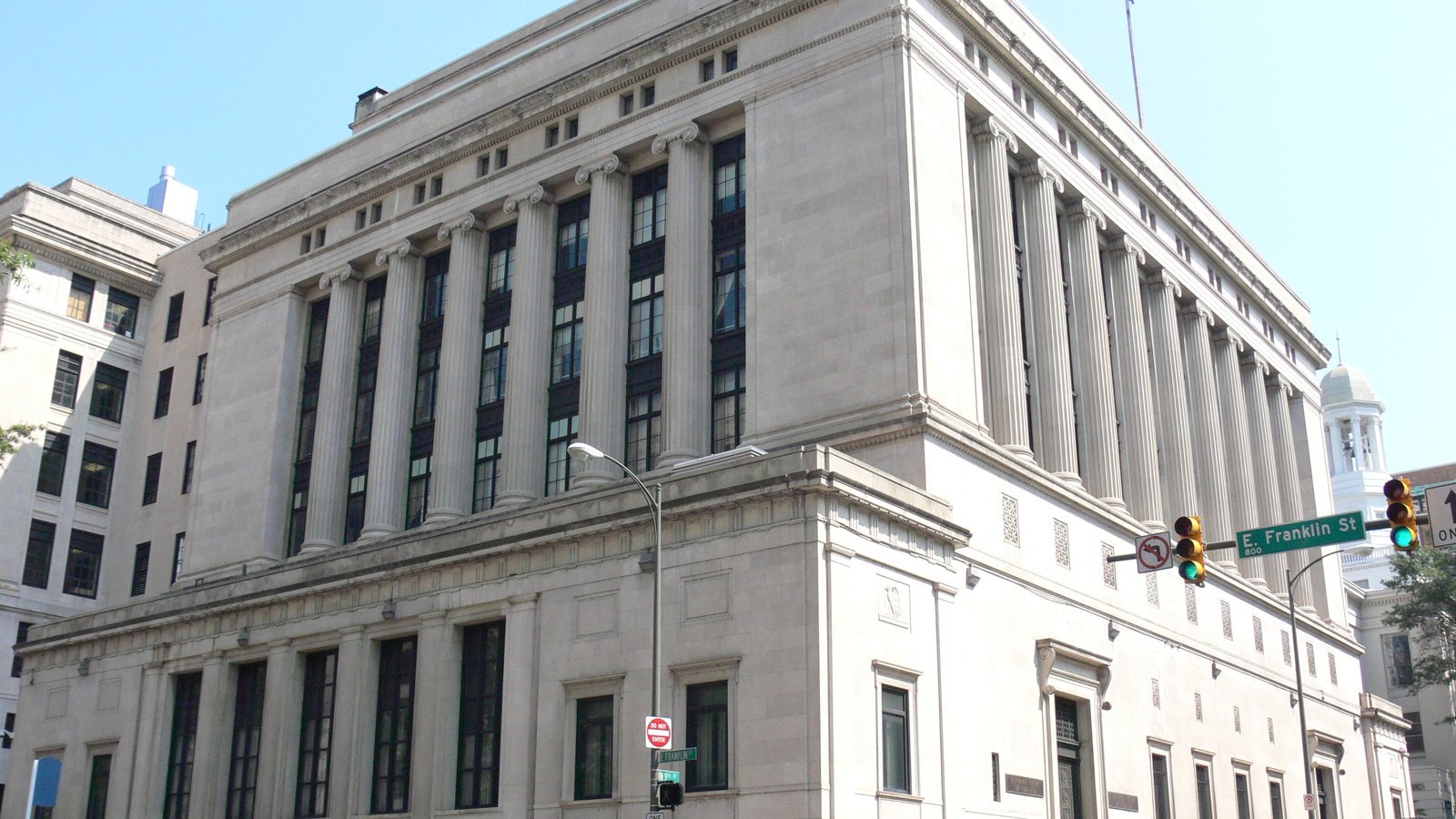
Featured image: Supreme Court of Virginia Building, Richmond. Photo by Morgan Riley via Wikimedia Commons, CC BY 3.0, cropped.