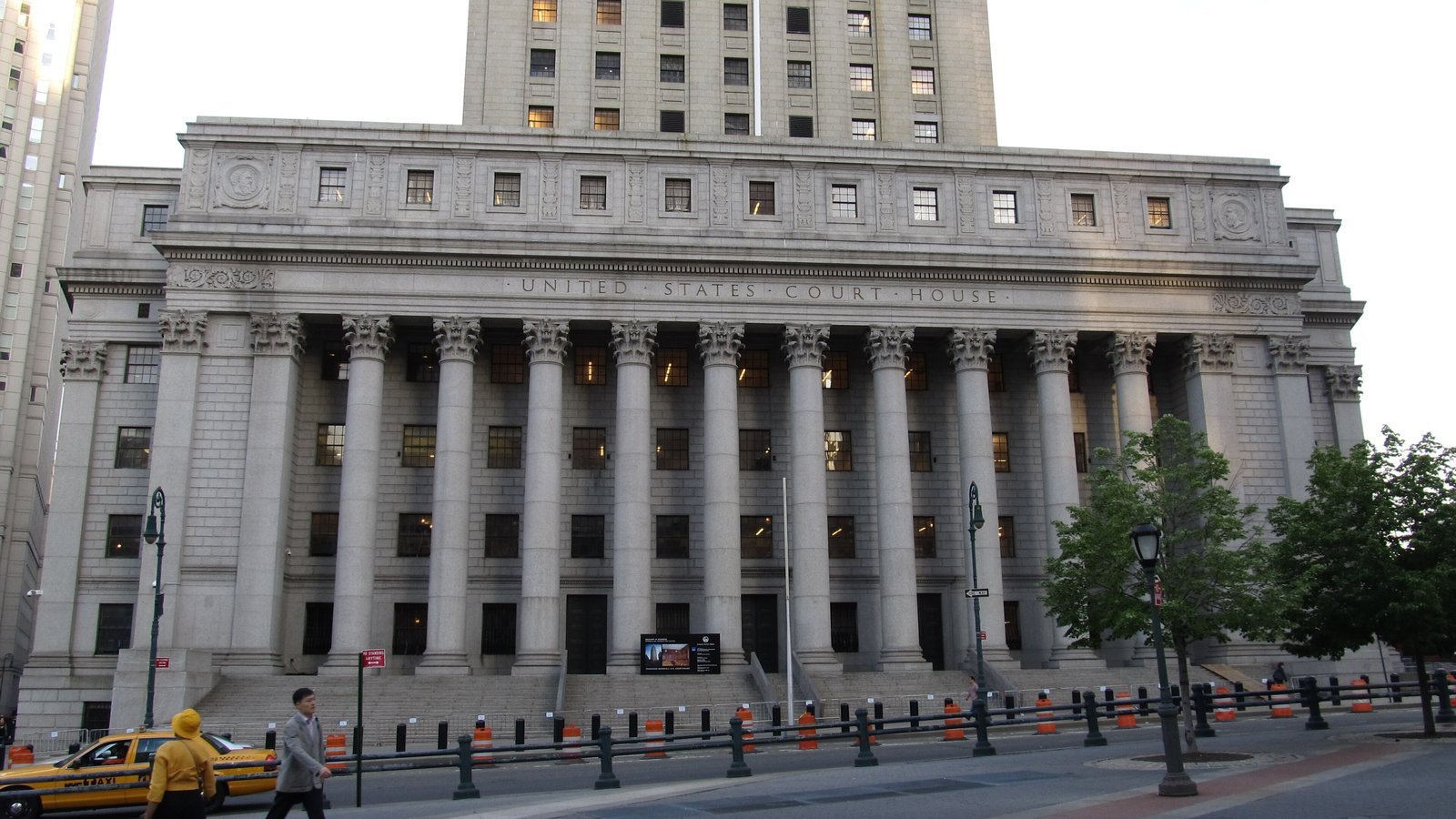
A federal appeals court on Nov. 23, 2026, gave President Donald Trump a new chance to move his New York hush money criminal case out of state court and into federal court. The two-page order from the U.S. Court of Appeals for the Second Circuit does not overturn his conviction. It tells a federal trial court to let Trump file a new “notice of removal,” asks New York’s courts to pause his state appeal in the meantime, and sets up a quick federal decision on where the case belongs.
What the Second Circuit Ordered
The panel (Chief Judge Raymond J. Lohier Jr. and Judges John M. Walker Jr. and José A. Cabranes) reviewed an Aug. 28, 2026, ruling by U.S. District Judge Alvin K. Hellerstein in the Southern District of New York, who had refused to let Trump file a second notice of removal. In its order in People of the State of New York v. Trump, No. 26-2427, the panel said it disagreed with the district court on two points:
- The district court was wrong to hold that removal is “categorically unavailable” in a state criminal case after a federal officer defendant has been convicted.
- The district court was also wrong to find that Trump had failed to show “good cause” for a late filing, as the Second Circuit defined that term in its 2025 opinion in the same case.
The panel vacated Hellerstein’s order and sent the case back with instructions to grant Trump’s motion for leave to file a second notice of removal. Once he files, the district court must notify the New York Supreme Court and the Appellate Division that the removal question is pending and, “in order to preserve the status quo,” respectfully ask that no further state court proceedings take place while it decides. The order directs the district court to “promptly issue a decision,” and says that if removal is allowed, the district court “shall adopt the state court judgment.” The panel said a full opinion explaining its reasoning “will follow in due course.”
What Is “Removal,” and Why Does It Matter Here?
Removal moves a case from state court to federal court. Two statutes are central here:
- 28 U.S.C. § 1442(a)(1), the federal officer removal statute, lets officers of the United States move cases brought against them “for or relating to any act under color of such office” into federal court. Courts generally also require a colorable federal defense.
- 28 U.S.C. § 1455 sets the procedure for removing criminal prosecutions. A notice must normally be filed “not later than 30 days after the arraignment in the State court, or at any time before trial, whichever is earlier,” but a federal court may allow a later filing “for good cause shown.”
Trump’s argument is that his case now “relates to” acts he took as president because of the Supreme Court’s July 1, 2024, decision in Trump v. United States, 603 U.S. 593. That ruling recognized presidential immunity for official acts and said evidence of a president’s immunized official conduct cannot be used at trial, even when the charges target unofficial conduct. Trump’s lawyers say the trial included such evidence, such as Oval Office conversations and 2018 social media posts. Prosecutors say the case was about private business records. If you are interested in how suits against federal officials work more generally, our explainer on whether you can still sue a federal officer covers a related corner of the law.
How the Case Got Here
Key dates, from court filings and news reports:
- March 30, 2023: A Manhattan grand jury indicted Trump on 34 counts of first-degree falsifying business records under N.Y. Penal Law § 175.10. Prosecutors alleged the records disguised reimbursements to his then-lawyer Michael Cohen for a $130,000 payment to adult film actress Stormy Daniels before the 2016 election. Trump has denied wrongdoing.
- May 2023: Trump first tried to remove the case to federal court. Hellerstein sent it back to state court in July 2023, and Trump dropped his appeal of that ruling.
- May 30, 2024: A jury convicted Trump on all 34 counts.
- September 2024: After the Supreme Court’s July 1, 2024, immunity ruling, Trump sought leave to file a second, late notice of removal. Hellerstein denied it.
- January 2025: Justice Juan Merchan sentenced Trump to an unconditional discharge, which leaves the conviction on his record with no jail, fine or probation, NBC News reported.
- Nov. 6, 2025: In New York v. Trump, 158 F.4th 458, the Second Circuit sent the removal question back to Hellerstein. It held that a defendant seeking to remove late must show circumstances outside his control, including new grounds for removal, and that he “acted with reasonable diligence and without undue delay.”
- Aug. 28, 2026: Hellerstein again denied leave. He noted Trump waited 64 days after the immunity ruling, first asking the state court to set aside the verdict, and wrote that a party may not “experiment on his case in the state court” and then switch. He also concluded that “hush money paid to an adult film star is not related to a President’s official acts.”
- Nov. 5, 2026: A five-justice panel of New York’s Appellate Division, First Department, heard Trump’s separate state appeal of the conviction. It has not ruled, Courthouse News reported.
Does This Erase the Conviction?
No. The order is about which court gets to decide Trump’s challenges, not whether he is guilty. The conviction and the unconditional discharge remain in place for now.
Erasing it would take several more steps. A federal district judge would first have to permit removal. Under the Second Circuit’s instructions, that court would then adopt the state court judgment, so the conviction would move to federal court as it stands. According to NBC News, that would allow Trump to argue to the Second Circuit that the conviction should be thrown out on immunity grounds. Either side could seek further review.
Who Decides Next?
That is an open question. Hellerstein died in October 2026 at age 92, and the case had not yet been reassigned to a new judge as of Nov. 23, according to NBC News and Law.com. Under Section 1455, a federal court that does not summarily send a case back must hold an evidentiary hearing promptly and then “make such disposition of the prosecution as justice shall require.”
Several things are worth watching:
- The full Second Circuit opinion. Its reasoning on post-conviction removal will matter beyond this case, and the deadline to seek rehearing runs from when it is issued.
- The state appeal. The Appellate Division has been asked to hold off. Whether it does, and when it rules if the case stays in state court, remains to be seen.
- The district attorney’s next move. A spokesperson for the office declined to comment on the order, NBC News reported. At argument, the office maintained the request came too late and that challenges belong in state court.
Why This Case Matters Beyond Trump
Federal officer removal is usually invoked by federal employees sued or charged in state court over their work, and removal after a conviction is rarely tested, so the forthcoming opinion could shape how state prosecutions of federal officials are handled. The case is also another example of how the courts check each other, a theme we cover in the role of the judiciary in democratic systems. For another recent case involving the president as a litigant, see our explainer on the Trump v. BBC defamation lawsuit.
Frequently Asked Questions
Did the appeals court overturn Trump’s hush money conviction?
No. It only ordered that Trump be allowed to file a second request to move the case to federal court. The conviction still stands.
What happens to the state appeal?
The Second Circuit told the district court to ask New York’s courts not to take further action while the removal question is pending. The Appellate Division heard arguments on Nov. 5, 2026, and had not ruled as of Nov. 23.
This article is for general information about a developing court case and is not legal advice. Court filings and rulings may change quickly; check the sources linked above for the latest.